Structural Immunology Pipeline
InstaDeep / BioNTech • 2023 – Present
End-to-end protein structure + ligand workflow to speed cancer vaccine target discovery; bridges wet-lab readouts with computational prioritisation.
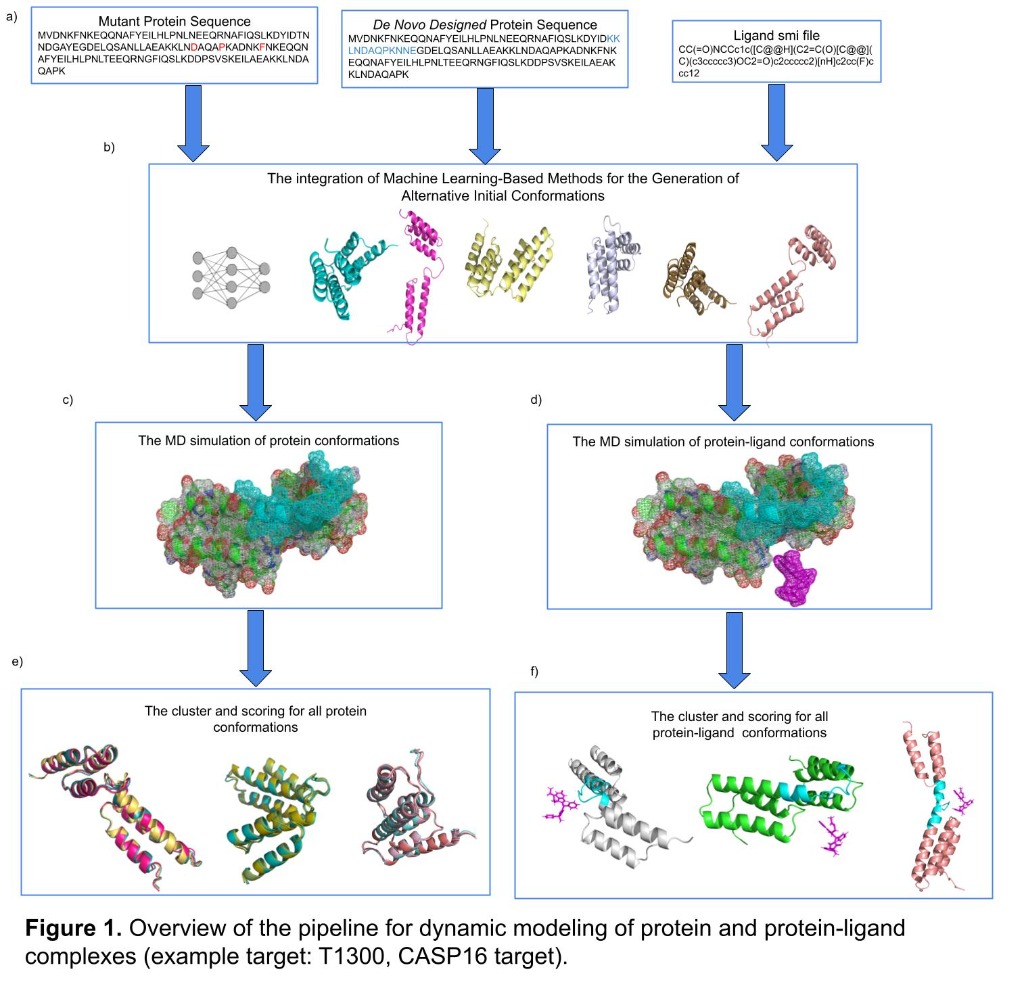
Pioneering the shift from static snapshots to dynamic ensembles. Integrating AI with Molecular Dynamics to model mutants, de novo designs, and drug resistance mechanisms.
2023 – Present
CurrentBuilt structural immunology pipeline with BioNTech to accelerate cancer vaccine target discovery.
2020 – Present
ResearchLead developer for IntFOLD/MultiFOLD refinement; integrated MD recycling to exceed AlphaFold2 accuracy.
Dynamic Ensembles
Capturing conformational diversity beyond static snapshots.
De Novo Design
Modelling novel folds where evolutionary history is silent.
Blending physics-based methods with modern ML to de-risk translational biology projects.
"Proteins are not statues. They are breathing, moving molecular machines. I am building tools to capture the dynamic ensembles that drive biology."
Conventional AI treats proteins as rigid shapes. My protocols integrate Molecular Dynamics to reveal how evolutionarily silent targets truly behave.
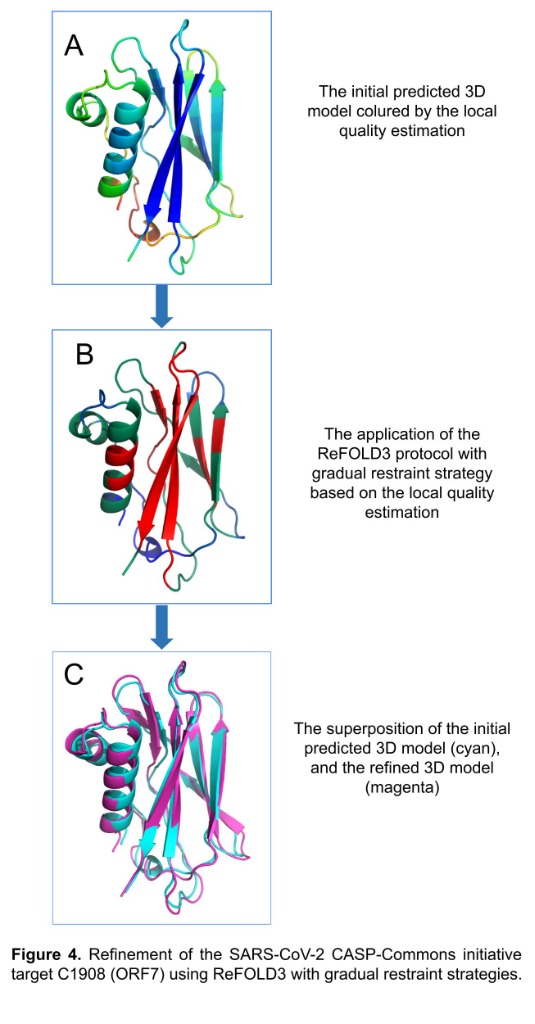
Using Local Quality Estimation, we lock certain regions while allowing binding sites to breathe, uncovering cryptic pockets for drug discovery.
"We are moving from predicting a single static snapshot to simulating the full movie of life. This shift is critical for engineering better enzymes and designing smarter drugs for traditionally undruggable targets."
Read Full Research ManifestoVisualizing complex biological systems through computational modeling and design.
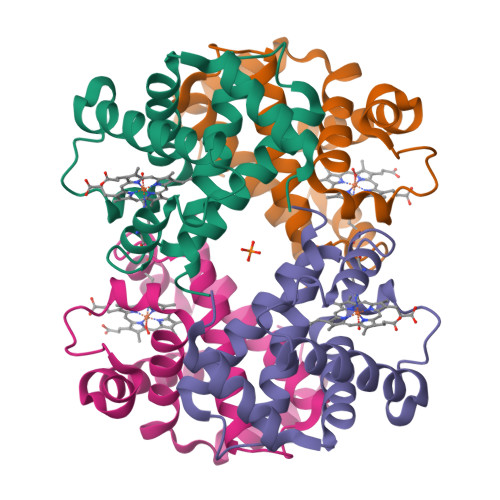
Designing novel protein folds with high stability. I use deep learning to hallucinate new backbones and sequence design to stabilize them, creating proteins that don't exist in nature.
Interactive mutational analysis. Select a variant below to see how specific residue changes impact local packing and stability scores in real-time.
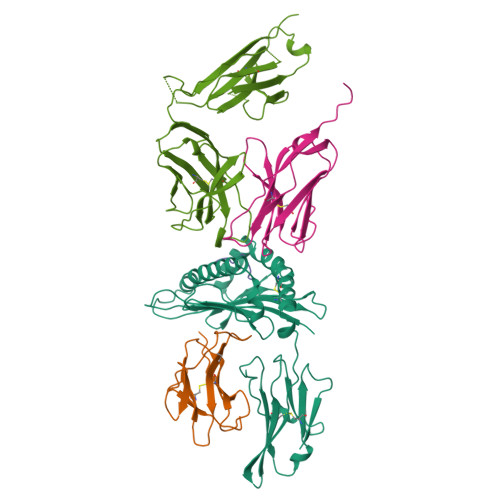
Real-time scoring of antibody-antigen interfaces. I optimize sequences to maximize DockQ (structural quality), QS (quaternary structure), and ICS (interface contact score) metrics.
Pioneering the shift from static snapshots to dynamic ensembles. Integrating AI with Molecular Dynamics to model mutants, de novo designs, and drug resistance.
Iterative refinement
Blend physics-based models with ML to close the loop from prediction to validation.
Operational pipelines
Ship pipelines teams can run, monitor, and extend across structure prediction, docking, and MD.
Collaboration-first
Work closely with domain experts so the science stays rigorous while tooling stays approachable.
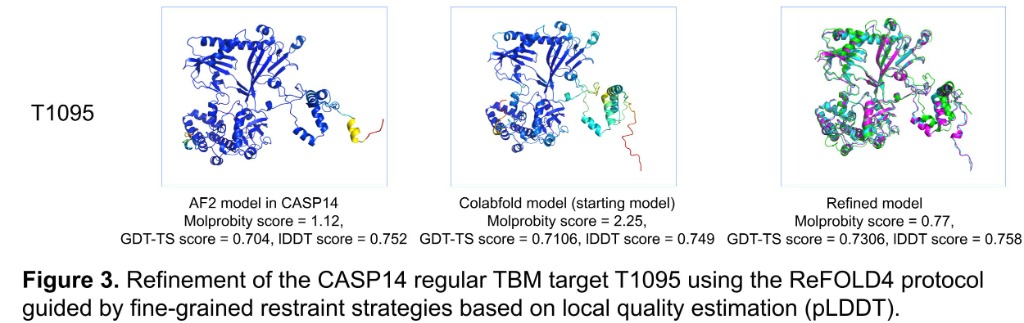
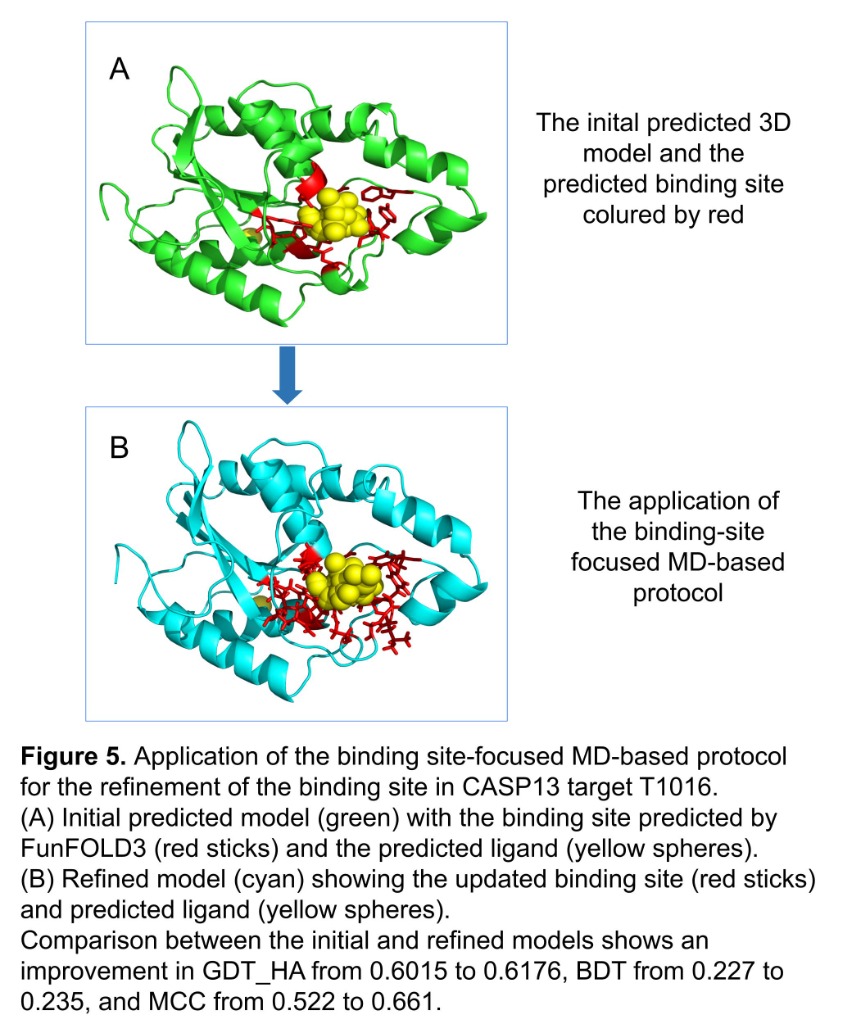
MD-based refinement of predicted 3D protein models with restraint strategies; developed ReFOLD2/3 (CASP13 top-ranked). Supervisor: Prof. Liam McGuffin.
GPA 3.86/4.00. In silico optimisation of zinc-binding proteins for biosensors (Supervisors: Gundog Yucesan, Alper Yilmaz).
Research on GaAs/GaAlAs quantum wells; GPA 67/100.
Coursework in classical mechanics, relativity, and quantum mechanics; GPA 2.78/4.00.
Peer-reviewed contributions to protein structure prediction, refinement, and quality assessment.
Adiyaman, R., Edmunds, N. S., Genc, A. G., Alharbi, S. M. A., & McGuffin, L. J.
Adiyaman, R., & McGuffin, L. J.
Taylor, K. A., Elgheznawy, A., Adiyaman, R., et al.
McGuffin, L. J., Alhaddad, S. N., Behzadi, B., Edmunds, N. S., Genc, A. G., & Adiyaman, R.
Fadini, A., Adiyaman, R., Alhaddad, S. N., et al.
McGuffin, L. J., Edmunds, N. S., Genc, A. G., Alharbi, S. M. A., Salehe, B. R., & Adiyaman, R.
Edmunds, N. S., Alharbi, S. M. A., Genc, A. G., Adiyaman, R., & McGuffin, L. J.
McGuffin, L. J., Adiyaman, R., Maghrabi, A. H. A., et al.
McGuffin, L. J., Aldowsari, F. M. F., Alharbi, S. M. A., & Adiyaman, R.
Sahli, K. A., Flora, G. D., ... Adiyaman, R., et al.
Kryshtafovych, A., ... Adiyaman, R. (CASP-COVID participants), et al.
Yucesan, G., Yilmaz, A., & Adiyaman, R.
InstaDeep / BioNTech • 2023 – Present
End-to-end protein structure + ligand workflow to speed cancer vaccine target discovery; bridges wet-lab readouts with computational prioritisation.
University of Reading • 2020 – Present
Integrated MD recycling and QA to push models beyond AlphaFold2; shipped ensemble prediction, ligand site, disorder, and PPI modules.
University of Reading • 2023 – 2024
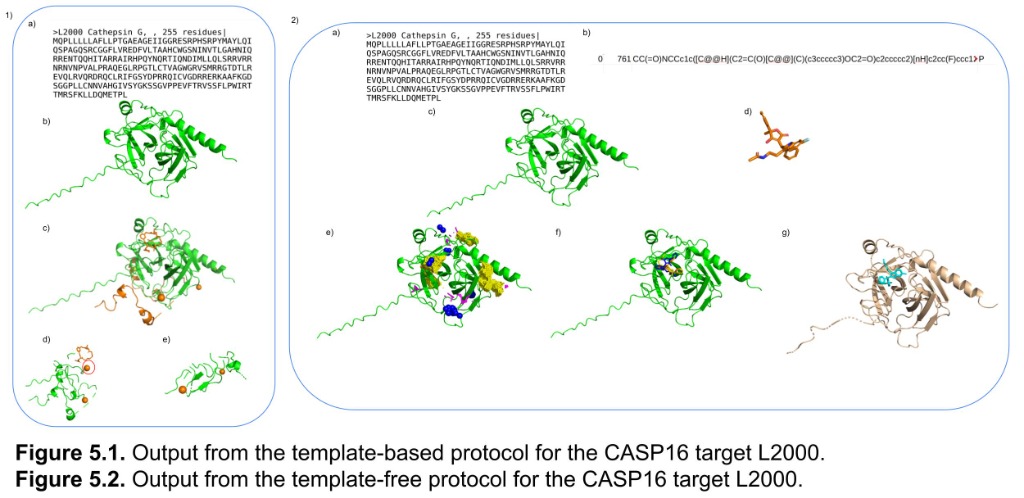
Ligand interaction prediction that outperforms AlphaFold3 on targeted docking tasks via blind + template docking and affinity scoring.
University of Reading • 2016 – 2020
Top-10 CASP13 refinement methods using MD restraint strategies to lift predicted structures toward native and improve ligand-site fidelity.
Next-generation tools for structure prediction, refinement, and quality assessment.
Refinement of 3D protein models using molecular dynamics simulations and quality assessment.
Quality assessment of protein-protein complex models using deep learning and structural features.
Template-based ligand binding site prediction using structural alignment and quality assessment.
Integrated web resource for high-performance protein structure and function prediction.
Five surprising truths about refinement, assembly, and validation in the post-AlphaFold era.
Why we need to move beyond static snapshots to capture the full range of conformational dynamics.
Integrating deep learning with molecular dynamics and local quality estimation to model mutants and novel folds.
How dynamic modelling will accelerate therapeutic discovery and the design of next-generation enzymes.
Follow my research journey and insights on X and Bluesky
We will publish discussions with experts in protein engineering, AI in drug discovery, and computational biology. Follow the channel for upcoming releases.
Auto-synced from YouTube
This research article presents the findings from the Evaluation of Model Accuracy (EMA) category during the CASP16 competition, a premier event for benchmarking protein structure prediction. The text details the methodologies of leading research groups, such as MIEnsembles-Server, ModFOLDdock2, MULTICOM, and GuijunLab, as they navigate challenges in estimating the quality of multimeric protein assemblies. A central theme is the comparison between consensus methods, which rely on comparing multiple models, and single-model methods that evaluate structures independently using physical principles or machine learning. The authors introduce the QMODE3 challenge, a new benchmark requiring the identification of the most accurate structures from massive pools of thousands of generated models. Ultimately, the paper serves to highlight how machine learning and structural bioinformatics are evolving to provide more reliable confidence metrics for complex biological molecules.
Watch on YouTubeModFOLDdock at CASP15 In our first episode, we examine the paper "Estimation of model accuracy in CASP15 using the ModFOLDdock server". For years, the community focused on single protein chains, but CASP15 saw a massive surge in multimeric assemblies, which nearly doubled in number. We explore how the McGuffin group met this challenge by developing three specific variants of the ModFOLDdock server
Watch on YouTubeThe provided sources examine advanced computational frameworks designed to predict and refine the 3D structures of proteins and their multimeric assemblies. Central to this research is the McGuffin group’s development of the MultiFOLD and ModFOLD suites, which automate the modelling of complex biological systems and provide critical Estimation of Model Accuracy (EMA). These tools integrate diverse sampling methods with stoichiometry prediction to outperform monolithic deep learning models in challenging scenarios, such as the SARS-CoV-2 proteome and human cellular processes. The texts also detail the ReFOLD refinement protocol, which utilises molecular dynamics simulations and quality estimates to correct local geometric errors and improve model precision. By offering democratised access through high-performance web servers and Dockerized software, these frameworks bridge the gap between theoretical predictions and experimental reality. Ultimately, the research underscores how combining deep learning with sophisticated quality assessment facilitates breakthroughs in drug discovery and functional bioinformatics.
Watch on YouTubeJoin my research network across these platforms for daily updates on protein design, structural biology toolsets, and academic insights.
Professional networking, industry news, and formal collaborations.
Connect Now →Fast-paced research signals, library drops, and bio-ML threads.
Follow Updates →Open research notes, daily signals, and lightweight threads.
Join the Feed →Open-source tools, CI/CD pipelines, and protein design codebases.
View Repos →Containerized tools, reproducible pipelines, and ready-to-run builds.
Browse Images →Molecular dynamics demos, research walk-throughs, and structural highlights.
Watch Demos →Citations, peer-reviewed publications, and structural biology impact metrics.
View Papers →For deep-dive inquiries, partnership offers, or specific research requests.
Send Email →I am always open to research collaborations, consulting on protein design pipelines, and partnering on structural biology products. Whether you have a question or a project in mind, reach out.
Email me directly
recepadiyaman2244@gmail.com