Issue #3: Cytotoxicity, apoptosis, molecular docking, and molecular dynamics study of novel compounds of Sulfamide derivatives coupled with DHP scaffolds as potent inhibitors of the MCF-7, A549, SKOV-3, and EA. yh926 carcinoma cells.
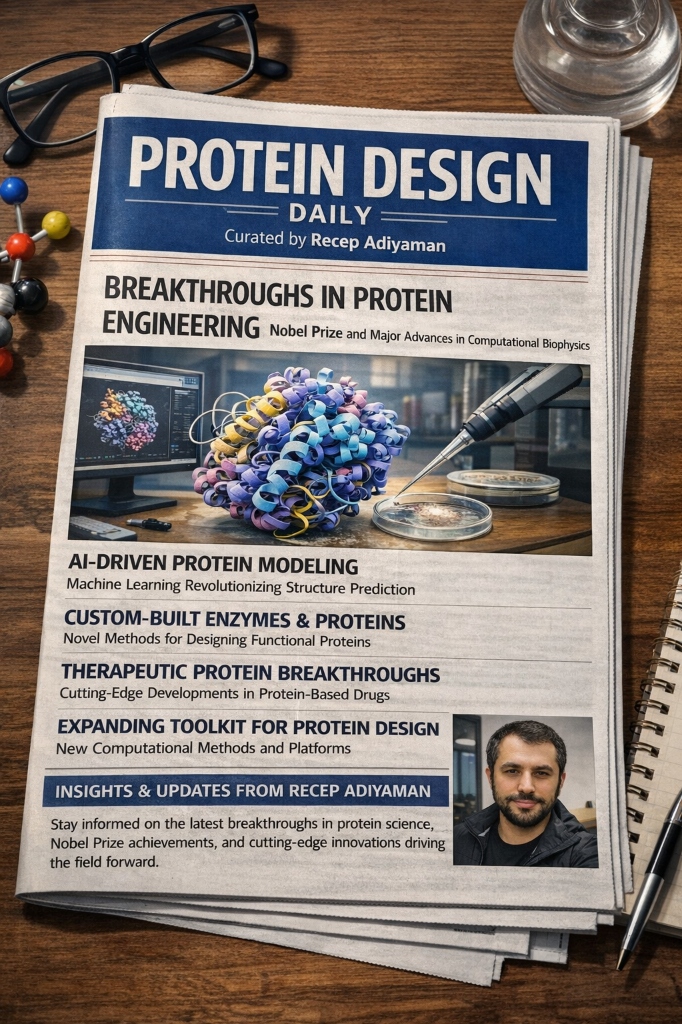
Building something in Protein Design?
I love collaborating on new architectural challenges. Let's build together.
🧬 Protein Design Digest
Curated protein signals by Recep Adiyaman
🚀 Today’s Top Signal
Cytotoxicity, apoptosis, molecular docking, and molecular dynamics study of novel compounds of Sulfamide derivatives coupled with DHP scaffolds as potent inhibitors of the MCF-7, A549, SKOV-3, and EA. yh926 carcinoma cells.
🧬 Abstract
A novel series of dihydropyridine-sulfonyl derivatives (AG-CHO and analogues A1-A7) were synthesized and structurally characterized. Molecular docking demonstrated favorable binding of these compounds to autophagy-associated and cancer-related targets, while molecular dynamics simulations confirmed A5 as the most stable ligand protein interactions. Functional assays in SKOV-3, MCF-7, A549, and EA.hy.926 cells using acridine orange staining and flow cytometry revealed significant autophagy induction. Among all tested compounds AG-CHO emerged as the most potent inducer of autophagy. Notably, derivatives such as A6 and A7 showed selective potency in endothelial cells, whereas A1, A5, and A7 were effective in A549 cells, indicating cell-specific activity. Collectively, this integrated computational and experimental study identifies A5 as the lead compound and highlights dihydropyridine-sulfonyl scaffolds as promising autophagy modulators and potential anticancer candidates for further preclinical development.
Why it matters: Enhances small-molecule or peptide docking accuracy for targeted drug discovery.
⭐ Additional Signals
Meeko: Molecule Parametrization and Software Interoperability for Docking and Beyond.
Molecule parametrization is an essential requirement to guarantee the accuracy of docking calculations. Parametrization includes a proper perception of chemical properties such as bonds, formal charges and protonation states. This includes large biological macromolecules, such as proteins and nucleic acids, and small molecules, such as ligands and cofactors. The structures of proteins and nucleic acids are challenging due to omission of several atoms from the structural model, and from the lack of connectivity and bond order information in the PDB and mmCIF file formats. For small molecules, the very large chemical diversity poses challenges for both validating correctness and providing accurate parameters. These challenges affect various modeling approaches like molecular docking and molecular dynamics. Moreover, several specialized methods (particularly in molecular docking) leverage specific chemical properties to add custom potentials, pseudoatoms, or manipulate atomic connectivity. To address these challenges, we developed Meeko, a molecular parametrization Python package that leverages the widely used RDKit cheminformatics library for a chemically accurate description of the molecular representation. Small molecules are modeled as single RDKit molecules, and biological macromolecules as multiple RDKit molecules, one for each residue. Meeko is highly customizable and designed to be easily scriptable for high-throughput processing, replacing MGLTools for receptor and ligand preparation.
From sweetener to risk factor: Network toxicology, molecular docking and molecular dynamics reveal the mechanism of aspartame in promoting coronary heart disease.
Aspartame, a widely used non-nutritive sweetener, has been epidemiologically linked to coronary heart disease (CHD), although the underlying mechanisms remain unclear. This study employed an integrative computational strategy combining network toxicology, molecular docking, and molecular dynamics to decode aspartame’s CHD-promoting mechanisms. Initially, the toxicity profile of aspartame was predicted using ProTox 3.0 and ADMETlab 3.0, which highlighted significant cardiotoxicity. Through multi-source target screening of aspartame (PharmMapper, SEA, etc.) and CHD (GeneCards, OMIM), 216 shared targets were identified. Protein-protein interaction network analysis revealed 10 hub targets (INS, PPARGC1A, TNF, AKT1, IL6, MMP9, IGF1, PTGS2, SIRT1, PPARG). Gene Ontology (GO) and Kyoto Encyclopedia of Genes and Genomes (KEGG) pathway analyses revealed significant enrichment in lipid metabolism, inflammatory responses, insulin resistance, and atherosclerosis-related pathways. Molecular docking and molecular dynamics simulations (MDS) demonstrated high-affinity binding of aspartame to three core targets (PTGS2, TNF, and PPARGC1A), with a binding energy ≤ -7.0 kcal/mol, and confirmed high binding stability. This study reveals that aspartame may promote the pathogenesis of CHD by disrupting cardiovascular homeostasis through multi-target interactions, including inflammatory response, metabolic dysregulation, and vascular remodeling. These findings provide molecular evidence for re-evaluating the safety profile of aspartame and establish a computational framework to guide experimental validation and preventive strategies.
🧪 AI & Research News
- Largest protein classification in history finds 700,000 unknown structures - Earth.com: Largest protein classification in history finds 700,000 unknown structures Earth.com
- Structural findings reveal how distinct GPCR ligands create different levels of activation | Newswise - Newswise: Structural findings reveal how distinct GPCR ligands create different levels of activation | Newswise Newswise
- Kolmogorov-Arnold networks bridge AI and scientific discovery by increasing interpretability - Phys.org: Kolmogorov-Arnold networks bridge AI and scientific discovery by increasing interpretability Phys.org
- Bets on Generative AI to Redefine Drug Discovery——IntelliGenAI and their foundation model approach - Pandaily: Bets on Generative AI to Redefine Drug Discovery——IntelliGenAI and their foundation model approach Pandaily
- A novel DCSTAMP antagonist impedes preosteoclast fusion via modulation of RAP1B–RAC1-mediated cytoskeletal remodeling - Nature: A novel DCSTAMP antagonist impedes preosteoclast fusion via modulation of RAP1B–RAC1-mediated cytoskeletal remodeling Nature
🏢 Industry Insight & Applications
- Layoff Tracker: Voyager Loses 30 Employees After Novartis Prunes Deal - BioSpace: Layoff Tracker: Voyager Loses 30 Employees After Novartis Prunes Deal BioSpace
- Galux, Boehringer Ingelheim to Jointly Explore AI in Precision Protein Design - Contract Pharma: Galux, Boehringer Ingelheim to Jointly Explore AI in Precision Protein Design Contract Pharma
- Profluent Bio Partners with Ensoma for AI-Designed Base Editors in Stem Cell Therapies - SynBioBeta: Profluent Bio Partners with Ensoma for AI-Designed Base Editors in Stem Cell Therapies SynBioBeta
- Lindus Health, Quotient Sciences Partner to Accelerate Drug Development to Clinical Trials - Contract Pharma: Lindus Health, Quotient Sciences Partner to Accelerate Drug Development to Clinical Trials Contract Pharma
- Europe Protein Engineering Market Size & Share, 2033 - Market Data Forecast: Europe Protein Engineering Market Size & Share, 2033 Market Data Forecast
⚡ Quick Reads
Enzyme Engineering Database (EnzEngDB): a platform for sharing and interpreting sequence-function relationships across protein engineering campaigns.
The discovery and engineering of new enzymes is important across the bioeconomy, with diverse applications from foods to pharmaceuticals, sensors to agriculture. However, enzyme engineering, in particular machine learning-guided engineering, is hampered by a lack of data. Currently there exists no database designed to capture and interpret datasets created in this domain, nor are there easy analysis and visualisation tools. We developed the Enzyme Engineering Database to provide a centralized resource and an online analysis tool to consolidate sequence-function data from enzyme engineering campaigns, thereby making three contributions: (i) a database into which researchers can deposit public data, (ii) visualisation and analysis tools for protein engineers to analyse their own data or compare enzyme variants to other engineering campaigns, and (iii) a gold-standard dataset for benchmarking automated extraction along with the first large language model extraction pipeline specific for enzyme engineering campaigns. The Enzyme Engineering Database is accessible at http://enzengdb.org/.
Multi-target exploration of newly synthesized pyrazoline-quinoline derivatives via in vitro screening, QSAR, molecular docking, MD simulations, and DFT analysis.
The development of multifunctional therapeutic agents remains a promising strategy in modern drug discovery, particularly for diseases associated with oxidative stress, bacterial infections, and cancer progression. In this study, a new series of [5-(substituted phenyl)-3-(substituted phenyl)-4,5-dihydro-pyrazol-1-yl]-(2-methyl-quinolin-4-yl)-methanones (9a-o) has been synthesized and evaluated for anticancer, antibacterial, and antioxidant activities through established in vitro and in silico screening models. The in vitro cytotoxic evaluation conducted against the human lung cancer cell line (A549) using the MTT assay revealed that all synthesized compounds have significant inhibitory potential. Among them, compounds 9i, 9b, 9h, 9d, and 9o demonstrated superior potency, showing IC₅₀ values of 3.68 ± 0.45 μM, 4.06 ± 0.35 μM, 4.33 ± 0.68 μM, 6.32 ± 0.89 μM, and 7.82 ± 0.52 μM compared to the reference drug doxorubicin, which showed an IC₅₀ of 9.48 ± 0.35 μM under identical experimental conditions. The same compounds also possess the best antibacterial (MIC value 12.5-25 μg/mL) and antioxidant potential. The in silico studies encompassed ADMET analysis, QSAR, molecular docking, and molecular dynamics simulations, which were carried out using Molsoft LLC, pkCSM, ChemDes, AutoDock 4.2, and GROMACS software. Their electronic and reactivity features were also analyzed through DFT calculations based on HOMO, LUMO, electron affinity, ionization potential, chemical potential, and global softness. The results of computational studies reinforced the findings in all dimensions. In summary, this study introduces a promising class of pyrazoline-quinoline conjugates with significant multifunctional efficacy.
UPLC-Q-TOF/MS-based Spectrum-effect Correlation Combined with Chemometrics and Molecular Docking for Quality Assessment and Screening of Bioactive Components with Hemostatic, Antinociceptive, and Anti-Inflammatory Activities in Liparis nervosa.
Ethnopharmacological relevance Liparis nervosa (LN) occurs in Southwest China and is traditionally used as a hemostatic and detoxifying agent; however, the pharmacodynamic basis for its medicinal properties is unclear; this impedes the quality standardization and clinical application of this herb. Aim of the study This study aimed to establish an integrated quality assessment system for LN by combining comprehensive chemical profiling with pharmacological evaluation to identify bioactive components and quality markers. Materials and methods Chemical profiling of ten regional LN specimens via UPLC-Q-TOF/MS revealed 53 shared components and characteristic fingerprints. Concurrently, systematic evaluation of hemostatic, antinociceptive, and anti-inflammatory activities was used to identify bioactive fractions. Using spectrum-effect modeling, which integrates techniques such as gray relational analysis, partial least squares regression, and bivariate correlation linked chromatographic features to bioactivities, these pharmacological effects were correlated with specific chemical components. Molecular docking was performed to validate target interactions. Orthogonal design coupled with spectrum-effect relationship analysis was used to pinpoint potential quality markers. Results As the first comprehensive study to systematically identify bioactive fractions and quality markers of LN, this work developed a tripartite evaluation framework integrating chemical profiling, pharmacological verification, and molecular docking-based target validation. Conclusions This methodology advances the standardization of LN, supports the interpretation of its pharmacological mechanisms of action, and facilitates the development of multi-target phytotherapeutic agents using LN bioactives.
Exploring the Mechanism of Platycladi Cacumen in Intervening Androgenetic Alopecia Based on Network Pharmacology, Molecular Docking, and Molecular Dynamics Simulation
Abstract As a traditional hair-growth-promoting herb, Platycladi Cacumen(PC) has a long history of folk application in the field of hair loss improvement. Preliminary modern pharmacological studies have suggested that its active components may exert potential effects by regulating hair follicle-related signaling pathways; however, for androgenetic alopecia (AGA), the exact targets and specific regulatory mechanisms of PC remain unelucidated, which provides a direction for research on natural drug-based intervention in AGA. In this study, network pharmacology was employed to predict the active components and core targets of PC. Targets associated with AGA were collected, and the intersection targets between PC and AGA were identified. Subsequently, protein-protein interaction (PPI) analysis, Gene Ontology (GO) enrichment analysis, and Kyoto Encyclopedia of Genes and Genomes (KEGG) pathway analysis were performed on the intersection targets to screen out the core targets. Thereafter, molecular docking and molecular dynamics simulation were conducted to validate the interactions between key active components and core targets. The component-target network diagram included 1044 interaction relationships between 32 components and 439 targets, among which quercetin, apigenin, myricetin, and hinokinin were identified as key components. The disease-target network diagram summarized 410 targets associated with AGA. Through PPI network analysis, key targets such as ESR1, BCL2, INS, AR, and STAT3 were screened out. The results of GO enrichment analysis and KEGG pathway analysis revealed that PC may exert its effects by regulating the EGFR receptor molecule and pathways including the HIF-1 signaling pathway. Molecular docking results showed that the binding energies of all complexes were less than -6.4 kcal/mol, indicating favorable binding effects. Molecular dynamics simulation results showed that the root-mean-square deviation (RMSD), root-mean-square fluctuation (RMSF), radius of gyration (Rg), solvent-accessible surface area (SASA), two-dimensional free energy landscape (FEL-2D), and FEL-3D of the simulation system all remained in an equilibrium state with small fluctuation amplitudes. This result indicated that the molecular system had a stable overall conformation, restricted local residue movement, a compact spatial structure, and stable internal chemical bonds—collectively confirming that the quercetin-STAT3, apigenin-AR, myricetin-STAT3, and hinokinin-AR complexes exhibited extremely strong binding stability. Collectively, Overall, this study systematically investigated the mechanism of action and potential value of PC leaves in intervening in AGA, providing a solid theoretical basis for the intervention of AGA with PC.
A hardware demonstration of a universal programmable RRAM-based probabilistic computer for molecular docking.
Molecular docking is a critical computational strategy in drug discovery, but the diversity of biomolecular structures and flexible binding conformations create an enormous search space that challenges conventional computing. Quantum computing holds promise but remains constrained by scalability, hardware limitations, and precision issues. Here, we report a probabilistic computer (p-computer) prototype that solves complex molecular docking. The system is built upon artificial probabilistic bits (p-bits), fabricated in 180 nm CMOS with BEOL HfO₂ RRAM and compatible with compute-in-memory (CIM) schemes. A key innovation is the integration of Gaussian Random Number Generator-based p-bits with CIM, where the sigmoidal response arises from the Gaussian cumulative distribution function with coupling and bias coefficients directly encoded in the RRAM crossbar. This co-design alleviates the memory-to-compute bottleneck of prior CMOS-only and CMOS + X (emerging nanodevices) p-computers. Using this architecture, we experimentally solved a 42-node docking problem of lipoprotein with the LolA-LolCDE complex-a key target in developing antibiotics against Gram-negative bacteria, with results consistent with the Protein-Ligand Interaction Profiler tool. This work represents an early hardware application of p-computing in computational biology and demonstrates its potential to overcome the success rate and efficiency limitations of current technologies for complex bioinformatics problems.
Structure-Aware Antibody Design with Affinity-Optimized Inverse Folding
Motivation: The clinical efficacy of antibody therapeutics critically depends on high-affinity target engagement, yet laboratory affinity-maturation campaigns are slow and costly. In computational settings, most protein language models (PLMs) are not trained to favor high-affinity antibodies, and existing preference optimization approaches introduce substantial computational overhead without clear affinity gains. Therefore, this work proposes SimBinder-IF, which converts the inverse folding model ESM-IF into an antibody sequence generator by freezing its structure encoder and training only its decoder to prefer experimentally stronger binders through preference optimization. Results: On the 11-assay AbBiBench benchmark, SimBinder-IF achieves a 55 percent relative improvement in mean Spearman correlation between log-likelihood scores and experimentally measured binding affinity compared to vanilla ESM-IF (from 0.264 to 0.410). In zero-shot generalization across four unseen antigen-antibody complexes, the correlation improves by 156 percent (from 0.115 to 0.294). SimBinder-IF also outperforms baselines in top-10 precision for ten-fold or greater affinity improvements. A case study redesigning antibody F045-092 for A/California/04/2009 (pdmH1N1) shows that SimBinder-IF proposes variants with substantially lower predicted binding free energy changes than ESM-IF (mean Delta Delta G -75.16 vs -46.57). Notably, SimBinder-IF trains only about 18 percent of the parameters of the full ESM-IF model, highlighting its parameter efficiency for high-affinity antibody generation.
💡 Pipeline Tip
Use Snakemake for reproducible end-to-end protein design workflows.
🛠️ Resources
- Dataset: PDB-REDO - Optimized protein structure database with refined models.
- Dataset: Protein Data Bank (PDB) - The single global archive for macromolecular structure data.
- Tool: FunFOLD5 - Automated system for protein ligand-binding site prediction and function annotation. View all tools →
- Tool: MultiFOLD/IntFOLD - High-performance protein structure prediction and quality assessment server. View all tools →
- Event: Structural Biology Events (Open)
- Event: Protein Design Hub (LinkedIn Group) (Ongoing)
- Job: Mercor hiring PhD Scientist AI Bioinformatics in Greater Montreal Metropolitan Area - LinkedIn at Bioinformatics Careers
- Job: Programme Manager – Human Genomics and Translational Data (HGTD) - LinkedIn at Bioinformatics Careers
Deep learning is not a magic wand, but a powerful lens for structural biology. — Recep Adiyaman