Issue #20: Synthesis, Anticancer Evaluation, and Molecular Docking of Triazolylmethyl-Dihydroquinazolinyl Benzoate Derivatives as Potential PARP-1 Inhibitors.
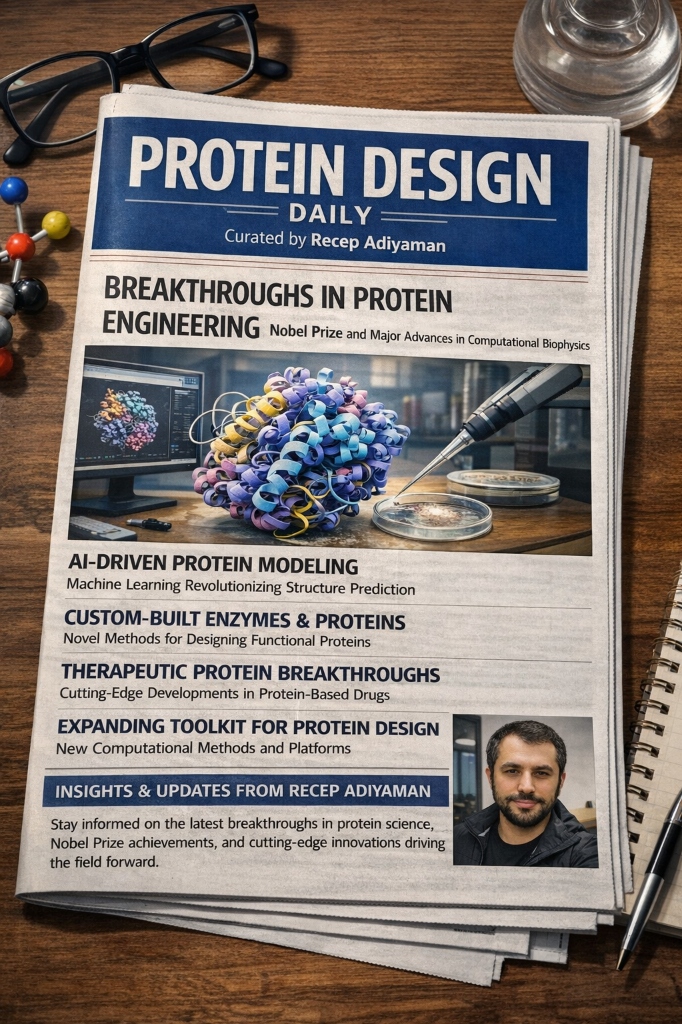
Building something in Protein Design?
I love collaborating on new architectural challenges. Let's build together.
🧬 Protein Design Digest
Curated protein signals by Recep Adiyaman
🚀 Today’s Top Signal
Synthesis, Anticancer Evaluation, and Molecular Docking of Triazolylmethyl-Dihydroquinazolinyl Benzoate Derivatives as Potential PARP-1 Inhibitors.
🧬 Abstract
Quinazolinone derivatives have emerged as promising scaffolds in medicinal chemistry due to their broad spectrum of biological activities, including anticancer potential. Incorporation of triazole rings through click chemistry has further boosted the pharmacological relevance of such compounds, due to the triazole’s stability, bioisosterism, and ability to engage in key interactions with biological targets. Motivated by these properties, a library of 24 triazolylmethyl-dihydroquinazolinyl benzoate (TDB) derivatives (7a-x) was synthesized using a click chemistry strategy, starting from anthranilamide and phthalic anhydride. The structures of the synthesized compounds were established through IR, 1 H NMR, 13 C NMR, and HRMS spectral analysis. The anticancer potential of all derivatives was evaluated by using SRB assay, with compounds 7j and 7q displaying notable activity, with GI 50 values of 22 and 48 µg/mL, respectively. In addition, compounds 7a, 7e, 7f, 7l, 7u, 7v, and 7x displayed moderate activity, with GI 50 values ranging from 58 to 77 µg/mL. In addition, molecular docking studies were performed using poly(ADP-ribose) polymerase-1 as the target enzyme, and the results confirmed that the TDB derivatives exhibited strong binding affinity. Furthermore, molecular dynamics simulations were conducted to evaluate the stability of the docked complexes, specifically for compounds 7j and 7q, which confirmed that the TDB derivatives formed stable interactions with poly(ADP-ribose) polymerase-1.
Why it matters: Provides actionable mutations to enhance catalytic efficiency or thermostability.
⭐ Additional Signals
Mechanisms of cellular senescence combined with molecular docking strategies: A biomarker study of potential therapeutic targets for allergic rhinitis.
Bioinformatics and molecular docking methods were used to screen potential biomarkers of cellular senescence in allergic rhinitis (Allergic rhinitis AR), which provided a theoretical basis for revealing the mechanism of AR and exploring new therapeutic approaches. Four AR-related gene chips (GSE19187, GSE43523, GSE44037, and GSE51392) were downloaded from the gene expression database (GEO) for data pooling. Screening differential genes (DEGs) were taken to intersect with cellular senescence-related genes (SRGs) to obtain differential senescence genes (DESRGs). The differential senescence genes were subjected to Gene Ontology Database (GO) functional analysis, Kyoto Encyclopedia of Genes and Genomes (KEGG) pathway analysis, and GSEA enrichment analysis. Protein-protein interaction (PPI) networks were constructed through the STRING database, MCODE plugin weights were analyzed to identify important gene cluster modules, and Hub genes were screened using the CytoHubba plugin topological network algorithm. Hub gene protein interactions network (GeneMANIA) was constructed by the GeneMANIA database. Predict Hub gene construct mRNA-miNA-lncRNA interactions by miRanda, miRDB, miRWalk, TargetScan, and spongeScan databases; construct Hub gene transcription factor regulatory networks by TRRUST database; analyze Hub gene-drug interactions by DGIdb database and select commonly used drugs in the clinic for molecular docking validation. A total of 264 differential genes were screened in the training set with corrected P.adj < 0.05 and |log2FC| ≥ 1.2 as the filtering condition, and a total of 866 cellular senescence genes, and 20 differential senescence genes (DESRGs) were obtained by taking the intersection of the two. A total of 19 Hub genes were obtained after PPI analysis, which were CCL2, STAT1, TLR2, IGFBP3, TLR3, KLF4, IL1RN, IRF1, SERPINB2, DPP4, MME, NQO1, SAMHD1, XAF1, PHGDH, EIF4EBP1, CTH, HSPA2, AHR The gene-protein interaction network identified 19 Hub genes associated with 21 functional proteins. 5 of the Hub gene loci were associated with 29 miRNAs and 53 lncRNAs. The transcription factor regulatory network obtained 15 transcription factors capable of regulating Hub genes. The analysis of drug-gene interactions identified 489 drugs that target hub genes. For example, in the case of budesonide, the interacting genes STAT1, TLR2, TLR3, and AHR were selected for molecular docking. Similarly, for mometasone, the interacting genes TLR2 and CTH were chosen for molecular docking. Mining AR-related Hub senescence genes by bioinformatics analysis, constructing PPI network, ceRNA network, transcription factor regulatory network, gene-drug interaction network and molecular docking validation, we screened 19 CCL2, STAT1, TLR2, IGFBP3, TLR3, KLF4, IL1RN, IRF1, SERPINB2, DPP4, MME, NQO1, SAMHD1, XAF1, PHGDH, EIF4EBP1, CTH, HSPA2, and AHR are expected to be Hub genes for potential diagnostic and therapeutic biomarkers, which will provide targets and new insights for further in-depth explorations of AR cellular senescence-related mechanisms of action and therapy.
Integrating machine learning and molecular docking to elucidate the mechanism of atrial fibrillation induced by di(2-ethylhexyl) phthalate.
Environmental exposure is closely associated with the development of cardiovascular diseases. This study aims to explore the molecular mechanism by which Di (2-ethylhexyl) phthalate (DEHP) induces atrial fibrillation (AF). AF-related target genes were identified through differential expression analysis of multiple datasets. Machine learning algorithms, Weighted Gene Co-expression Network Analysis (WGCNA), Machine learning (ML) and molecular docking technology were integrated to investigate the binding interaction between DEHP and target proteins. A total of 8 potential key targets (ITGB2, ARPC1B, RYR2, FPR2, MPEG1, PRKCD, LCP1, RAC2) involved in DEHP-induced AF were identified. ML analysis confirmed these genes as core regulatory genes, among which ITGB2, ARPC1B, and RYR2 exhibited high diagnostic potential (Area Under the Receiver Operating Characteristic Curve, AUC ≥ 0.85). Molecular docking simulations showed stable binding specificity between DEHP and these core targets, with binding energies all below -3 kcal/mol. DEHP may promote AF pathogenesis by targeting specific genes and signaling pathways. DEHP has high binding affinity with ITGB2, ARPC1B, and RYR2, which may serve as targets for future interventions. These findings provide important insights into the in-depth exploration of the mechanism underlying DEHP-induced AF.
Mechanistic study of plastic monomers in gestational diabetes mellitus: A network toxicology and molecular docking approach.
Plastics are widely used in various fields such as food packaging, textile fibers, building materials, and transportation. Although the relationship between plastic additives and diseases has been reported, there is limited research on the association between plastic monomers (PM) and gestational diabetes mellitus (GDM). This study aims to investigate the link between environmental PM and GDM. By employing advanced network toxicology and molecular docking techniques, we successfully elucidated the molecular mechanisms by which PM may induce GDM. Utilizing databases such as PubChem, SEA, Super-PRED, SwissTargetPrediction, PharmMapper, Gene Cards, and OMIM, we identified potential targets associated with the disease. Further analysis using STRING and Cytoscape software helped determine the core targets most significantly related to these metabolic disorders. Additionally, Gene Ontology and Kyoto Encyclopedia of Genes and Genomes pathway enrichment analyses were conducted using the David database to characterize these core targets. Finally, molecular docking with CB-Dock2 was used to validate the binding affinity of PM to these target proteins. Our findings suggest that PM may potentially induce GDM by modulating the insulin signaling pathway through STAT3, AKT1, and TP53. In summary, this work provides novel insights into the mechanisms by which environmental pollutants may trigger GDM, thereby laying a theoretical foundation for disease prevention and treatment. It offers valuable references for the safety evaluation of plastics, urging food safety regulatory agencies to strengthen oversight and encouraging the public to reduce plastic usage.
🧪 AI & Research News
- AI: OpenAI leans into Healthcare with ChatGPT. RTZ #963 - AI: Reset to Zero: AI: OpenAI leans into Healthcare with ChatGPT. RTZ #963 AI: Reset to Zero
🏢 Industry Insight & Applications
- Biologics for bone regeneration: advances in cell, protein, gene, and mRNA therapies - Nature: Biologics for bone regeneration: advances in cell, protein, gene, and mRNA therapies Nature
- Top 10 Biotech Startups In 2026 - inventiva.co.in: Top 10 Biotech Startups In 2026 inventiva.co.in
- 1st biotech IPO of 2026 sees Aktis bring in $318M via upsized offering - Fierce Biotech: 1st biotech IPO of 2026 sees Aktis bring in $318M via upsized offering Fierce Biotech
- Fierce Pharma Asia—China biotech deal spree rolls on; Shionogi buys Tanabe’s ALS business - Fierce Pharma: Fierce Pharma Asia—China biotech deal spree rolls on; Shionogi buys Tanabe’s ALS business Fierce Pharma
- Aktis raises $318M in 2026’s first biotech IPO - BioPharma Dive: Aktis raises $318M in 2026’s first biotech IPO BioPharma Dive
- Boltz takes off with $28M seed, partners with Pfizer on AI drug discovery - FirstWord: Boltz takes off with $28M seed, partners with Pfizer on AI drug discovery FirstWord
- Boltz Bags $28M Funding and Pfizer Partnership for Biomolecular AI Boost - TechRepublic: Boltz Bags $28M Funding and Pfizer Partnership for Biomolecular AI Boost TechRepublic
⚡ Quick Reads
Leveraging Consensus Docking Approaches for Human Mitochondrial Complexes I and III.
Although recent progress has been made, structure-based methods such as molecular docking are still underexplored in the context of toxicity prediction. These approaches offer added value, particularly in addressing challenges such as activity cliffs─i.e., caused by stereoisomerism─that are difficult to capture by conventional Quantitative Structure-Activity Relationship (QSAR) methods. In this study, we investigated the ability of docking scoring functions and protein-ligand interaction fingerprints to rank the potential hazard of compounds targeting the human mitochondrial complexes I and III (CI, NADH:ubiquinone oxidoreductase and CIII, cytochrome bc 1 complex). We applied an induced fit docking protocol to account for binding site flexibility and performed a set of binding energy minimizations for rescoring of representative binding modes. Both individual scoring functions and consensus scoring approaches achieved acceptable rank correlation to experimentally derived data from CIII (Spearman r : 0.89 and 0.86). Moreover, consensus interaction fingerprints that combine molecular interactions from both docking outputs captured differences of inhibitor subtypes at CIII. Follow-up in vitro testing confirmed an isomerism-dependent activity cliff of E-/Z-Fenpyroximate at CI. These findings support the utility of using consensus docking and scoring as a screening-level tool for prioritizing compounds based on interpretable predicted relative binding affinities at CI and CIII.
Mitigation conferred by banana flower extract against aflatoxin-induced oxidative stress, inflammation, apoptosis, molecular docking, and histological disturbances in rabbits.
This study investigated the protective effects of banana flower extract (BFE) against aflatoxin B1 (AFB1)-induced oxidative stress, inflammation, and immune dysfunction in growing rabbits. One hundred and twenty rabbits were divided into four experimental groups: a control group (receiving a vehicle only), an AFB1 group (receiving 0.3 mg AFB1/kg diet), a BFE group (receiving 500 mg/kg banana flower extract), and an AFB1 and BFE group for eight weeks. The results showed that exposure to AFB1 resulted in reduced growth performance, along with elevated liver enzymes, blood lipids, and renal dysfunction (P < 0.05). Additionally, 8-OHdG levels were significantly higher in the AFB1 group, but BFE treatment significantly reduced this elevation (P < 0.05). AFB1 also caused a significant increase in oxidative stress (as indicated by higher MDA and PC levels) and a decrease in antioxidant enzyme activity (SOD, GPx, and TAC) and immune response (IgG and IgM). Pro-inflammatory responses were significantly increased by AFB1 exposure, while BFE treatment effectively prevented apoptosis (P < 0.05) and inflammation (P < 0.01) in the rabbits, and significantly improving immunoglobulin synthesis (P < 0.05). BFE protected against renal and intestinal structural damage induced by AFB1. Molecular docking studies revealed that gallic and protocatechuic acids interacted with BAX (binding energies: -4.17 and -6.78 kcal/mol, respectively), Caspase-3 (-4.28 and -7.38 kcal/mol, respectively), and SOD (-4.16 and -6.38 kcal/mol, respectively). These findings suggest that the compounds may play a role in modulating apoptosis and antioxidant defense. This study underscores the potential of utilizing by-product extracts, such as banana flower extract, to mitigate the adverse effects of aflatoxins in animals through their apoptotic and antioxidant properties.
Tensor-DTI: Enhancing Biomolecular Interaction Prediction with Contrastive Embedding Learning
Accurate drug-target interaction (DTI) prediction is essential for computational drug discovery, yet existing models often rely on single-modality predefined molecular descriptors or sequence-based embeddings with limited representativeness. We propose Tensor-DTI, a contrastive learning framework that integrates multimodal embeddings from molecular graphs, protein language models, and binding-site predictions to improve interaction modeling. Tensor-DTI employs a siamese dual-encoder architecture, enabling it to capture both chemical and structural interaction features while distinguishing interacting from non-interacting pairs. Evaluations on multiple DTI benchmarks demonstrate that Tensor-DTI outperforms existing sequence-based and graph-based models. We also conduct large-scale inference experiments on CDK2 across billion-scale chemical libraries, where Tensor-DTI produces chemically plausible hit distributions even when CDK2 is withheld from training. In enrichment studies against Glide docking and Boltz-2 co-folder, Tensor-DTI remains competitive on CDK2 and improves the screening budget required to recover moderate fractions of high-affinity ligands on out-of-family targets under strict family-holdout splits. Additionally, we explore its applicability to protein-RNA and peptide-protein interactions. Our findings highlight the benefits of integrating multimodal information with contrastive objectives to enhance interaction-prediction accuracy and to provide more interpretable and reliability-aware models for virtual screening.
AI-driven <i>de novo</i> design of BRAF inhibitors with enhanced binding affinity and optimized drug-likeness.
Background Traditional drug discovery methods, such as high-throughput screening (HTS), are often inefficient and costly, especially in complex areas like oncology. The BRAF V600E mutation is a validated therapeutic target in cancers such as melanoma, thyroid carcinoma, and colorectal cancer. However, existing BRAF inhibitors face challenges like acquired resistance and off-target toxicity. Artificial intelligence (AI) has emerged as a transformative tool for designing novel inhibitors more efficiently. Methods This study employed REINVENT 4, an advanced machine learning (ML) framework using recurrent neural networks and transformer architectures, for targeted generation and property optimization of BRAF V600E inhibitors, integrating reinforcement learning (RL) for drug-likeness optimization and transfer learning (TL) for mutation-specific design. Molecular docking and dynamics simulations were used to evaluate binding affinity and stability. Results The AI-driven approach generated 41,721 novel BRAF V600E inhibitor candidates with enhanced drug-likeness (mean Quantitative Estimate of Drug-likeness (QED) score: 0.61 ± 0.17 vs . the training set 0.40 ± 0.13) and predicted inhibitory activity (83.8% with predicted pIC50 > 6). The generated compounds showed a 32% reduction in mean molecular weight (326.8 ± 45.6 g/mol vs . 480.8 ± 84.2 g/mol in the training set) while maintaining inhibitory potency. Pharmacokinetic analysis revealed that 99.7% of generated compounds satisfied Lipinski’s Rule of Five criteria, suggesting favorable absorption and distribution profiles. Molecular docking analysis of selected compounds revealed strong binding affinities, with an average free energy of -8.03 ± 1.12 kcal/mol and top-performing compounds reaching -11.5 kcal/mol. Molecular dynamics simulations conducted over 200 ns confirmed complex stability, demonstrating protein backbone RMSD values of 0.35-0.55 nm and ligand RMSD values of 0.086-0.161 nm. Structural novelty assessment using Tanimoto similarity coefficients showed values below 0.45 when compared with FDA-approved BRAF inhibitors (including Sorafenib and Vemurafenib). Discussion This work highlights a reproducible, integrated AI-driven workflow demonstration for targeted inhibitor generation. The generated inhibitors exhibit favorable drug-like properties and inhibitory activity, offering a scalable solution for designing safer cancer therapies. Experimental validation is needed to address potential discrepancies between computational predictions and biological behavior.
Emphasizing the role of oxidative stress and Sirt-1/Nrf2 and TLR-4/NF-κB in Tamarix aphylla mediated neuroprotective potential in rotenone-induced Parkinson’s disease: In silico and in vivo study.
Parkinson’s disease (PD) presents as a progressive deterioration of dopaminergic neurons, a process closely associated with increased oxidative damage due to accumulated reactive oxygen species, leading to weakened antioxidant defenses and ultimately neuronal dysfunction. Currently, no definitive approach exists to counteract the degeneration of dopaminergic neurons in PD. The use of Tamarix aphylla as a protective agent against Parkinson’s disease is not well studied yet. In this study, a rotenone-induced rodent model was utilized to examine the neuroprotective potential of T. aphylla extract. The chemical composition of T. aphylla leaves was analyzed through LC-HR-ESI-MS profiling, identifying 13 metabolites from various chemical categories. Furthermore, the research incorporated the STRING database and Cytoscape software to perform a protein-protein interaction (PPI) analysis, pinpointing essential hub proteins involved in neuroprotection and inflammation in PD. Molecular docking and a 150 ns molecular dynamics simulation were performed to assess the interaction of plant-derived compounds with the Sirt-1 catalytic domain. Compound 12, one of the bioactive compounds found in T. aphylla, exhibited strong binding affinity and stability throughout the 150 ns simulation, highlighting its role as a neuroprotective agent. This study underscores the fusion of computational and experimental techniques to investigate natural neuroprotective compounds, providing potential therapeutic strategies for PD treatment by influencing key pathways linked to oxidative damage and neuroinflammation.
Decision Tree for Prediction of Binding Affinity.
Recent advances in machine learning methods indicate the adequacy of these approaches to build scoring functions to predict binding affinity. Applying the scoring function to determine protein-ligand interaction is a pivotal step in the early stages of drug discovery projects, where we integrate docking results and machine learning techniques to create an adequate model for a protein system of interest. Here, we focus on regression models built using Decision Trees to address protein-ligand interactions. This powerful machine learning technique can build models to address complex systems for classification and regression problems. We show how to apply the Decision Tree method to explore the concept of scoring function space using the program SKReg4Model. This program builds regression models using features from Vina Force Field, and energy terms are determined using Molegro Virtual Docker or any docking program. We based its code on the program SAnDReS 2.0 and the Scikit-Learn library. All datasets and a Jupyter Notebook with SKReg4Model discussed in this work are available at GitHub: https://github.com/azevedolab/docking#readme . We made the program SAnDReS 2.0 available at https://github.com/azevedolab/sandres .
Machine Learning for Protein Science and Engineering.
Recent years have seen significant breakthroughs at the intersection of machine learning and protein science. Tools such as AlphaFold have revolutionized protein structure prediction. They are also enabling variant effect prediction and functional annotation of proteins, as well as opening up new possibilities for protein design. However, these technological advances must be balanced with sustainable computing practices.
Mechanistic study on the peripheral cannabinoid-1 receptor blockers based on the tricyclic scaffolds.
Cannabinoid-1 receptor (CB1R) is one of the promising targets for treating various diseases, various antagonists, agonists and reverse agonists targeting CB1R have been synthesized and investigated for clinical use. In this work, we used molecular docking and molecular dynamics (MD) simulations to explore the interaction between CB1R and six antagonists: BNS807, BNS808 and BNS809 derived from template 1 and BNS815, BNS816, BNS825 derived from template 2. Six initial conformations were selected for the subsequent MD simulations using molecular docking and cluster analysis. The binding free energy analysis shows that in the three systems of BNS807-CB1R, BNS808-CB1R and BNS809-CB1R, the increase of binding affinity is attributed to the nonpolar contributions of residues Val196, Ala120, Phe200, Phe268, Phe380 and Phe381 and large-volume aromatic substituents are favorable for binding, BNS809 with small substituent CH3 could form the hydrogen bond with Gln115. In the three systems based on template 2, Ile105, Ile116 and Phe177 increase the binding affinity of the antagonists to CB1R. Furthermore, the seven-membered and pyrazole ring of BNS816 formed vdW interactions with Phe170, stabilizing the conformation of BNS816-CB1R. These results reveal the interaction patterns of six peripheral antagonists with CB1R, providing theoretical guidance for the design of drug molecules targeting CB1R.
💡 Pipeline Tip
Check for missing residues in PDB files using PDB-Fixer before simulation.
🛠️ Resources
- Dataset: UniRef - Clustered protein sequence sets for fast similarity searches.
- Dataset: BFD - Big Fantastic Database for deep learning protein modeling.
- Tool: RFdiffusion - State-of-the-art generative model for de novo protein design. View all tools →
- Tool: ProteinMPNN - High-speed sequence design optimized for fixed-backbone folding. View all tools →
- Event: Protein Design Hub (LinkedIn Group) (Ongoing)
- Event: Structural Biology Events (Open)
- Job: Clinical Bioinformatics Scientist - Indeed at Indeed Jobs
- Job: Bioinformatics engineer salary in Norristown, PA - Indeed at Indeed Jobs
The protein structure is the language of life; design is its poetry. — Recep Adiyaman