Issue #21: Geometric deep learning assists protein engineering. Opportunities and Challenges.
Protein Design Digest - 2026-01-13 - Geometric deep learning assists protein engineering. Opportunities and Challenges.
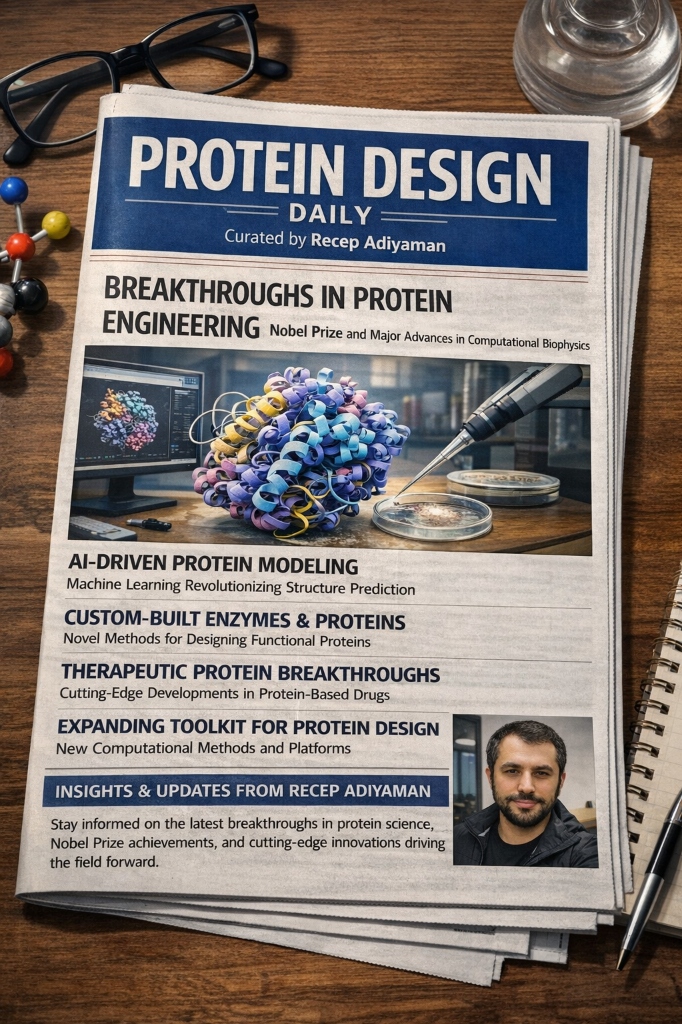
Building something in Protein Design?
I love collaborating on new challenges. Let's build together.
Subscribe to Protein Design Digest
Daily curated signals from arXiv, PubMed, and BioRxiv.
Signal of the Day
Geometric deep learning assists protein engineering. Opportunities and Challenges.
Protein engineering is experiencing a paradigmatic transformation through the integration of geometric deep learning (GDL) into computational design workflows. While traditional approaches such as rational design and directed evolution have achieved significant progress, they remain constrained by the vastness of sequence space and the cost of experimental validation. GDL overcomes these limitations by operating on non-Euclidean domains and by capturing the spatial, topological, and physicochemical features that govern protein function. This perspective provides a comprehensive and critical overview of GDL applications in stability prediction, functional annotation, molecular interaction modeling, and de novo protein design. It consolidates methodological principles, architectural diversity, and performance trends across representative studies, emphasizing how GDL enhances interpretability and generalization in protein science. Aimed at both computational method developers and experimental protein engineers, the review bridges algorithmic concepts with practical design considerations, offering guidance on data representation, model selection, and evaluation strategies. By integrating explainable artificial intelligence and structure-based validation within a unified conceptual framework, this work highlights how GDL can serve as a foundation for transparent, interpretable, and autonomous protein design. As GDL converges with generative modeling, molecular simulation, and high-throughput experimentation, it is poised to become a cornerstone technology for next-generation protein engineering and synthetic biology.
Why this matters: Critical for improving fold accuracy and reducing structural uncertainty in de novo design.
Also Worth Reading
Mechanisms of cellular senescence combined with molecular docking strategies: A biomarker study of potential therapeutic targets for allergic rhinitis.
Bioinformatics and molecular docking methods were used to screen potential biomarkers of cellular senescence in allergic rhinitis (Allergic rhinitis AR), which provided a theoretical basis for revealing the mechanism of AR and exploring new therapeutic approaches. Four AR-related gene chips (GSE19187, GSE43523, GSE44037, and GSE51392) were downloaded from the gene expression database (GEO) for data pooling. Screening differential genes (DEGs) were taken to intersect with cellular senescence-related genes (SRGs) to obtain differential senescence genes (DESRGs). The differential senescence genes were subjected to Gene Ontology Database (GO) functional analysis, Kyoto Encyclopedia of Genes and Genomes (KEGG) pathway analysis, and GSEA enrichment analysis. Protein-protein interaction (PPI) networks were constructed through the STRING database, MCODE plugin weights were analyzed to identify important gene cluster modules, and Hub genes were screened using the CytoHubba plugin topological network algorithm. Hub gene protein interactions network (GeneMANIA) was constructed by the GeneMANIA database. Predict Hub gene construct mRNA-miNA-lncRNA interactions by miRanda, miRDB, miRWalk, TargetScan, and spongeScan databases; construct Hub gene transcription factor regulatory networks by TRRUST database; analyze Hub gene-drug interactions by DGIdb database and select commonly used drugs in the clinic for molecular docking validation. A total of 264 differential genes were screened in the training set with corrected P.adj < 0.05 and |log2FC| ≥ 1.2 as the filtering condition, and a total of 866 cellular senescence genes, and 20 differential senescence genes (DESRGs) were obtained by taking the intersection of the two. A total of 19 Hub genes were obtained after PPI analysis, which were CCL2, STAT1, TLR2, IGFBP3, TLR3, KLF4, IL1RN, IRF1, SERPINB2, DPP4, MME, NQO1, SAMHD1, XAF1, PHGDH, EIF4EBP1, CTH, HSPA2, AHR The gene-protein interaction network identified 19 Hub genes associated with 21 functional proteins. 5 of the Hub gene loci were associated with 29 miRNAs and 53 lncRNAs. The transcription factor regulatory network obtained 15 transcription factors capable of regulating Hub genes. The analysis of drug-gene interactions identified 489 drugs that target hub genes. For example, in the case of budesonide, the interacting genes STAT1, TLR2, TLR3, and AHR were selected for molecular docking. Similarly, for mometasone, the interacting genes TLR2 and CTH were chosen for molecular docking. Mining AR-related Hub senescence genes by bioinformatics analysis, constructing PPI network, ceRNA network, transcription factor regulatory network, gene-drug interaction network and molecular docking validation, we screened 19 CCL2, STAT1, TLR2, IGFBP3, TLR3, KLF4, IL1RN, IRF1, SERPINB2, DPP4, MME, NQO1, SAMHD1, XAF1, PHGDH, EIF4EBP1, CTH, HSPA2, and AHR are expected to be Hub genes for potential diagnostic and therapeutic biomarkers, which will provide targets and new insights for further in-depth explorations of AR cellular senescence-related mechanisms of action and therapy.
Design, Synthesis, Molecular Docking, Structure Activity Relationship, and In Vivo Evaluation of Pyrazole-Pyrimidines for Discovering New Nonsteroidal Anti-Inflammatory Drugs.
Nonsteroidal anti-inflammatory drugs are among the most prescribed worldwide to treat pain, fever, and inflammation. However, they can cause severe adverse effects such as gastric, duodenal, hepatic, and renal injuries. Thus, the search for effective and new drugs is of high priority. Herein, the synthesis of a new series 4-((5-substituted-3-(trifluoromethyl)-1H-pyrazol-1-yl)methyl)-6-(trifluoromethyl) pyrimidin-2-substituted (pyrazole-pyrimidines) obtained through the cyclocondensation reaction of pyrazole-enaminones with amidines under mild conditions is reported. The chemical structures are confirmed by 1 H and 13 C NMR, mass spectrometry, and single-crystal X-ray analysis for compounds 4c and 4g. Molecular docking studies are conducted to identify selective cyclooxygenase-2 (COX-2) inhibitors, revealing that compounds 4d, 4j, and 4k display higher binding affinity. ADMET predictions (absorption, distribution, metabolism, excretion, and toxicity) corroborate to the docking results, suggesting favorable pharmacokinetic and toxicological properties. The in vivo antinociceptive activity is investigated in mice using the capsaicin-induced nociception model. Oral administration of compounds 4d, 4e, 4f, 4j, and 4k significantly reduces nociceptive responses, achieving effects comparable or superior to celecoxib, without altering locomotor activity. Altogether, the findings demonstrate that pyrazole-pyrimidine derivatives, especially 4d and 4k, are promising candidates for the development of selective COX-2 analgesics, combining antinociceptive efficacy with a favorable toxicological profile.
Mechanistic study of plastic monomers in gestational diabetes mellitus: A network toxicology and molecular docking approach.
Plastics are widely used in various fields such as food packaging, textile fibers, building materials, and transportation. Although the relationship between plastic additives and diseases has been reported, there is limited research on the association between plastic monomers (PM) and gestational diabetes mellitus (GDM). This study aims to investigate the link between environmental PM and GDM. By employing advanced network toxicology and molecular docking techniques, we successfully elucidated the molecular mechanisms by which PM may induce GDM. Utilizing databases such as PubChem, SEA, Super-PRED, SwissTargetPrediction, PharmMapper, Gene Cards, and OMIM, we identified potential targets associated with the disease. Further analysis using STRING and Cytoscape software helped determine the core targets most significantly related to these metabolic disorders. Additionally, Gene Ontology and Kyoto Encyclopedia of Genes and Genomes pathway enrichment analyses were conducted using the David database to characterize these core targets. Finally, molecular docking with CB-Dock2 was used to validate the binding affinity of PM to these target proteins. Our findings suggest that PM may potentially induce GDM by modulating the insulin signaling pathway through STAT3, AKT1, and TP53. In summary, this work provides novel insights into the mechanisms by which environmental pollutants may trigger GDM, thereby laying a theoretical foundation for disease prevention and treatment. It offers valuable references for the safety evaluation of plastics, urging food safety regulatory agencies to strengthen oversight and encouraging the public to reduce plastic usage.
Research & AI Updates
- Uncovering a Hidden Mechanism in Met Receptor Activation - Asia Research News | — Uncovering a Hidden Mechanism in Met Receptor Activation Asia Research News |.
- Advanced Mass Spectrometry Reveals Protein Folding Dynamics in Ribosome-Nascent Chain Complex - geneonline.com — Advanced Mass Spectrometry Reveals Protein Folding Dynamics in Ribosome-Nascent Chain Complex geneonline.com.
- Beyond the Protein: How AlphaFold 3 Redefined the Blueprint of Life and Accelerated the Drug Discovery Revolution - FinancialContent — Beyond the Protein: How AlphaFold 3 Redefined the Blueprint of Life and Accelerated the Drug Discovery Revolution FinancialContent.
- Network-Driven Computational Framework Identifies FDA-Approved Drug Repurposing Across Heterogeneous Brain Cancers - Frontiers — Network-Driven Computational Framework Identifies FDA-Approved Drug Repurposing Across Heterogeneous Brain Cancers Frontiers.
From the Industry
- Fierce Biotech Fundraising Tracker ‘26: Kinaset’s $103M series B; AirNexis flies in with $200M - Fierce Biotech — Fierce Biotech Fundraising Tracker ‘26: Kinaset’s $103M series B; AirNexis flies in with $200M Fierce Biotech.
- FDA Guidance to Update Clinical Trials - respiratory-therapy.com — FDA Guidance to Update Clinical Trials respiratory-therapy.com.
- Layoff Tracker: Rampart Shuts Down, InflaRx cuts 30% of Staff - BioSpace — Layoff Tracker: Rampart Shuts Down, InflaRx cuts 30% of Staff BioSpace.
- Dupilumab Most Effective Among Standard Drugs, Biologics in Prurigo Nodularis - HCPLive — Dupilumab Most Effective Among Standard Drugs, Biologics in Prurigo Nodularis HCPLive.
- Newer biologics show strong drug survival for psoriasis patients - Managed Healthcare Executive — Newer biologics show strong drug survival for psoriasis patients Managed Healthcare Executive.
- GeneDx Teams Up with Komodo Health to Revolutionize Rare Disease Diagnosis - OpenTools — GeneDx Teams Up with Komodo Health to Revolutionize Rare Disease Diagnosis OpenTools.
- Funding for Risky Biotechs Is Returning - The Wall Street Journal — Funding for Risky Biotechs Is Returning The Wall Street Journal.
Quick Reads
Network Pharmacology and Molecular Docking Identify Medicarpin as a Potent CASP3 and ESR1 Binder Driving Apoptotic and Hormone-Dependent Anticancer Activity.
Ovarian cancer (OC) remains one of the most lethal gynecologic malignancies due to late diagnosis, rapid progression, and frequent chemoresistance. Read more →
Immunoinformatics-based design and evaluation of a multi-epitope vaccine against Vibrio fluvialis.
Vibrio fluvialis is an emerging foodborne pathogen causing gastroenteritis and extraintestinal infections, representing a significant public health concern due to rising antimicrobial resistance and the absence of an approved vaccine. Read more →
<i>In silico</i> structural analysis of carbapenemase variants in <i>Klebsiella pneumoni</i>ae: insights for precision drug discovery against multidrug-resistant strains.
Background Carbapenemase-producing Klebsiella pneumoniae severely limits treatment options by inactivating carbapenem and other β-lactam antibiotics. Read more →
Structure Elucidation, Biological and Molecular Docking Studies of the δ‑Endotoxin Cry1Ca17 from Bacillus thuringiensis Strain BUPM14
Phytochemical Profiling, Molecular Docking, ADMET Analysis of Zingiber Officinale Peel Extract for the Biogenic Synthesis of ZnO and Fe-Doped ZnO Nanoparticles with Antibacterial and Photocatalytic Potential
Alkamides from Piper nigrum and their potential inhibitory effect on NLRP3 inflammatory activation.
Four previously undescribed alkamides (1-4) were isolated from the fruits of Piper nigrum. Read more →
Multispectral and Molecular Dynamics Study on the Interactions Between α-Amylase and Four Sesquiterpene Lactone Compounds.
This study compared the inhibitory effects and mechanisms of four sesquiterpene lactones derived from Asteraceae plants on α-amylase using enzymatic kinetics, multi-spectral techniques, and molecular docking methods. Read more →
A novel CLPP variant in a Pakistani family with Perrault syndrome associated with recurrent fevers.
Perrault syndrome (PRLTS) is an autosomal recessive disease with sensorineural hearing loss and ovarian dysfunction in girls, and either a fluctuating neurological phenotype or not. Read more →
Pipeline Tip
Employ HADDOCK for ambiguous restraints in protein-protein docking.
Resources & Tools
- Dataset: BFD - Big Fantastic Database for deep learning protein modeling.
- Dataset: MGnify - Metagenomics resource for microbiome sequence data.
- Tool: ProteinMPNN - High-speed sequence design optimized for fixed-backbone folding. View all tools →
- Tool: OpenFold - Fast, trainable, and open implementation of AlphaFold2. View all tools →
- Event: Structural Biology Events (Open)
- Event: Protein Design Hub (LinkedIn Group) (Ongoing)
- Job: Bioinformatics Jobs, Employment in Pennsylvania - Indeed at Indeed Jobs
- Job: 2026 Summer Intern - Computational Sciences CoE - Computational Biology and Medicine - Indeed at Indeed Jobs
Deep learning is not a magic wand, but a powerful lens for structural biology. — Recep Adiyaman