Issue #23: Benchmarking co-folding methods to predict the structures of covalent protein-ligand complexes.
Protein Design Digest - 2026-01-15 - Benchmarking co-folding methods to predict the structures of covalent protein-ligand complexes.
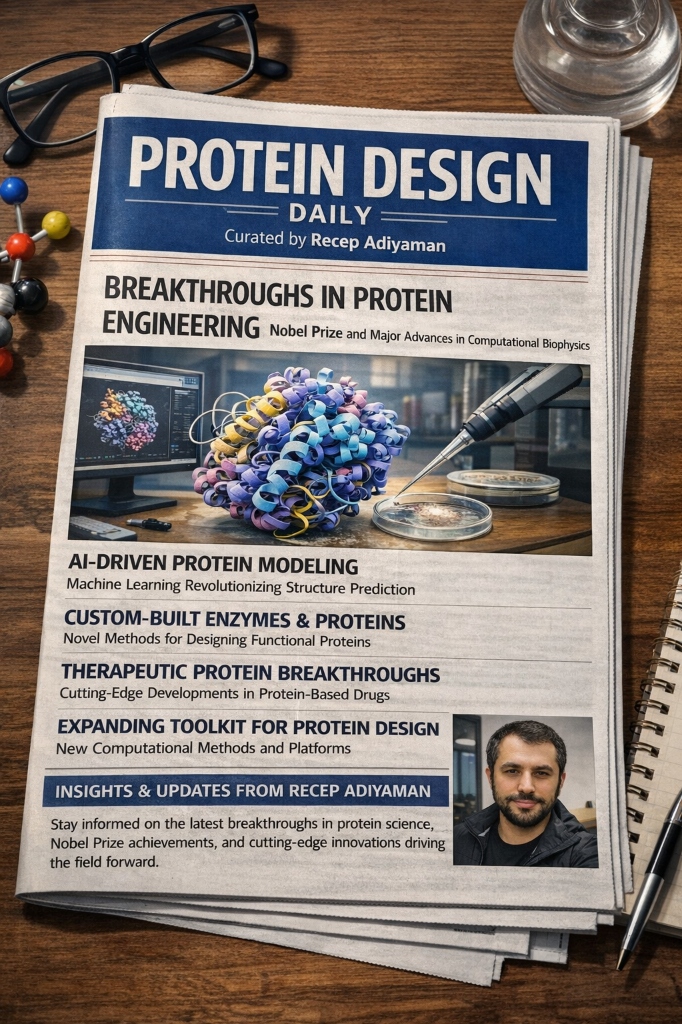
Building something in Protein Design?
I love collaborating on new challenges. Let's build together.
Subscribe to Protein Design Digest
Daily curated signals from arXiv, PubMed, and BioRxiv.
Signal of the Day
Benchmarking co-folding methods to predict the structures of covalent protein-ligand complexes.
Targeted covalent inhibitors (TCIs) are emerging as a new modality in drug discovery because of their strong binding affinity and prolonged target engagement. However, the rational design of TCIs remains a significant challenge and is hindered by the lack of methods that accurately predict the structures of covalent protein-ligand complexes. Recent advances in co-folding approaches have made substantial strides in modeling complex biomolecular structures. Despite significant progress, their performance profiles for predicting the structures of covalent protein-ligand complexes remain largely unexplored because of the absence of rigorous benchmarks. Here, we introduce CoFD-Bench, a comprehensive benchmark dataset comprising 218 recently resolved covalent complexes designed to systematically evaluate both classical docking methods (AutoDock-GPU, CovDock, and GNINA) and deep learning co-folding models (AlphaFold3 (AF3), Chai-1, and Boltz-1x). Our results demonstrate that co-folding methods achieve superior ligand RMSD accuracy and protein-ligand interaction recovery. However, their performance markedly declines for novel pocket-ligand pairs. In contrast, classical docking methods exhibit stable but modest performance, which is primarily limited by target conformations. Furthermore, computational efficiency evaluations show that co-folding methods are slower than classical approaches, posing challenges for large-scale predictions. We also reveal that AF3 has the potential to identify native covalent residues through noncovalent co-folding, with a ligand RMSD comparable to that of covalent co-folding. These findings offer a possible route to explore covalent binding without prior specification of reactive residues, which are often unknown in real-world scenarios. Our study provides crucial insights and new opportunities for future co-folding-based TCI design, informing future model applications and improvements. CoFD-Bench offers rigorous evaluation criteria, diverse docking scenarios, and various methodological baselines, positioning it as an important benchmark for future model development and assessment.
Why this matters: Critical for improving fold accuracy and reducing structural uncertainty in de novo design.
Also Worth Reading
In Silico Discovery of RIOK3 Inhibitors Against Pancreatic Ductal Adenocarcinoma Using Homology Modelling, Molecular Docking, Molecular Dynamics Simulations, ADMET Prediction, and MTT assay
Abstract Pancreatic ductal adenocarcinoma (PDAC) is an aggressive cancer strongly linked to RIO Kinase 3 (RIOK3), which promotes progression by stabilizing and phosphorylating Focal Adhesion Kinase (FAK). Advances in protein structure prediction, particularly AlphaFold2, have significantly enhanced our understanding of protein dynamics, aiding in the identification of potential inhibitors for targeted therapies. This study used structure-based virtual screening, molecular dynamics simulations, ADMET/toxicity prediction, and in vitro validation to identify potential inhibitors of RIOK3 for PDAC treatment. The 3D structure of RIOK3 was predicted using AlphaFold2 and docked with FDA-approved drugs via AutoDock Vina. Pharmacokinetic and pharmacodynamic properties were assessed with SwissADME, and in vitro validation was performed using MTT assays to assess cell viability and growth inhibition. Four top-scoring compounds were identified, with binding energies between − 11.3 and − 10.4 kcal/mol. Venetoclax showed the most stable complex with RIOK3, followed by Conivaptan and Irinotecan. Drospirenone showed weaker binding. Molecular dynamics simulations and MM/GBSA analysis supported the stability of these complexes. SwissADME and ProTox-II confirmed that the compounds met drug-likeness criteria but exhibited distinct pharmacokinetic and toxicity profiles. In vitro MTT assays showed concentration-dependent growth inhibition in PANC-1 cells, with Conivaptan having the lowest IC₅₀ value. This study identifies RIOK3 as a promising therapeutic target for PDAC, with Venetoclax, Conivaptan, Drospirenone, and Irinotecan as repurposable candidates for further research. Further studies should include biochemical assays, expanded cytotoxicity profiling in multiple PDAC cell lines, and in vivo evaluations to validate RIOK3-targeted therapies for PDAC treatment.
Benchmarking all-atom biomolecular structure prediction with FoldBench.
Accurate prediction of biomolecular complex structures is fundamental for understanding biological processes and rational therapeutic design. Recent advances in deep learning methods, particularly all-atom structure prediction models, have significantly expanded their capabilities to include diverse biomolecular entities, such as proteins, nucleic acids, ligands, and ions. However, comprehensive benchmarks covering multiple interaction types and molecular diversity remain scarce, limiting fair and rigorous assessment of model performance and generalizability. To address this gap, we introduce FoldBench, an extensive benchmark dataset consisting of 1522 biological assemblies categorized into nine distinct prediction tasks. Our evaluations reveal critical performance dependencies, showing that ligand docking accuracy notably diminishes as ligand similarity to the training set decreases, a pattern similarly observed in protein-protein interaction modeling. Furthermore, antibody-antigen predictions remain particularly challenging, with current methods exhibiting failure rates exceeding 50%. Among evaluated models, AlphaFold 3 consistently demonstrates superior accuracy across the majority of tasks. In summary, our results highlight significant advancements yet reveal persistent limitations within the field, providing crucial insights and benchmarks to inform future model development and refinement.
Mechanistic study of plastic monomers in gestational diabetes mellitus: A network toxicology and molecular docking approach.
Plastics are widely used in various fields such as food packaging, textile fibers, building materials, and transportation. Although the relationship between plastic additives and diseases has been reported, there is limited research on the association between plastic monomers (PM) and gestational diabetes mellitus (GDM). This study aims to investigate the link between environmental PM and GDM. By employing advanced network toxicology and molecular docking techniques, we successfully elucidated the molecular mechanisms by which PM may induce GDM. Utilizing databases such as PubChem, SEA, Super-PRED, SwissTargetPrediction, PharmMapper, Gene Cards, and OMIM, we identified potential targets associated with the disease. Further analysis using STRING and Cytoscape software helped determine the core targets most significantly related to these metabolic disorders. Additionally, Gene Ontology and Kyoto Encyclopedia of Genes and Genomes pathway enrichment analyses were conducted using the David database to characterize these core targets. Finally, molecular docking with CB-Dock2 was used to validate the binding affinity of PM to these target proteins. Our findings suggest that PM may potentially induce GDM by modulating the insulin signaling pathway through STAT3, AKT1, and TP53. In summary, this work provides novel insights into the mechanisms by which environmental pollutants may trigger GDM, thereby laying a theoretical foundation for disease prevention and treatment. It offers valuable references for the safety evaluation of plastics, urging food safety regulatory agencies to strengthen oversight and encouraging the public to reduce plastic usage.
Research & AI Updates
- ‘Avatar’ Oscar Winner Mark Sagar, Graphic India’s Sharad Devarajan Launch AI Storytelling Studio FaiBLE (Exclusive) - IMDb — ‘Avatar’ Oscar Winner Mark Sagar, Graphic India’s Sharad Devarajan Launch AI Storytelling Studio FaiBLE (Exclusive) IMDb.
- The Digital Microscope: How AlphaFold 3 is Decoding the Molecular Language of Life - FinancialContent — The Digital Microscope: How AlphaFold 3 is Decoding the Molecular Language of Life FinancialContent.
- Researchers develop AI tool to predict how shapeshifting proteins connect inside cells - The Hindu — Researchers develop AI tool to predict how shapeshifting proteins connect inside cells The Hindu.
- The Patent Cliff - Brownstone Research — The Patent Cliff Brownstone Research.
From the Industry
- Layoff Tracker: Lyra Shutters, EMD Serono Downsizes - BioSpace — Layoff Tracker: Lyra Shutters, EMD Serono Downsizes BioSpace.
- AbbVie inks USD 5.6bn global licensing deal with Chinese biotech for cancer therapy - medwatch.com — AbbVie inks USD 5.6bn global licensing deal with Chinese biotech for cancer therapy medwatch.com.
- Juvena lands $33.5m to advance more regenerative biologics to the clinic - Longevity.Technology — Juvena lands $33.5m to advance more regenerative biologics to the clinic Longevity.Technology.
- 2026 biotech funding tracker: recent highlights - Labiotech.eu — 2026 biotech funding tracker: recent highlights Labiotech.eu.
- FDA Guidance to Update Clinical Trials - respiratory-therapy.com — FDA Guidance to Update Clinical Trials respiratory-therapy.com.
- Newer biologics show strong drug survival for psoriasis patients - Managed Healthcare Executive — Newer biologics show strong drug survival for psoriasis patients Managed Healthcare Executive.
- GeneDx Teams Up with Komodo Health to Revolutionize Rare Disease Diagnosis - OpenTools — GeneDx Teams Up with Komodo Health to Revolutionize Rare Disease Diagnosis OpenTools.
Quick Reads
Unexplored regions of the protein sequence-structure map revealed at scale by a library of foldtuned language models
Amino-acid sequence space is combinatorially vast, with well-folded proteins distributed sparsely and connected by vanishingly few permissible mutational paths. Read more →
Structure-based identification of triazole-based PARP1 inhibitors: insights from docking and molecular dynamics simulations.
Background Poly (ADP-ribose) polymerase 1 (PARP1) is a critical enzyme involved in DNA repair mechanisms, making it a promising target for anticancer drug development. Read more →
Integrating machine learning and molecular docking to reveal the molecular network of aflatoxin B1-induced colorectal cancer
Abstract Aflatoxin B1 (AFB1) contributes to colorectal cancer development through multiple molecular pathways. Read more →
Role of gut microbiota metabolites against vein graft restenosis: insights from network pharmacology, molecular docking and molecular dynamic simulation.
Background Gut microbiota metabolites are increasingly recognized for their role in modulating chronic disease progression. Read more →
Comparative Molecular Docking Analysis, of Natural and Synthetic Ligands, Targeting BRCA1, BRCA2, ER, and PR in Breast Cancer Treatment.
Objective Breast cancer remains a leading cause of cancer-related mortality in women, necessitating the development of innovative therapeutic strategies. Read more →
AI-Powered Structural and Co-Expression Analysis of Potato (<i>Solanum tuberosum</i>) <i>StABCG25</i> Transporters Under Drought: A Combined AlphaFold, WGCNA, and MD Approach.
Drought stress significantly impacts potato ( Solanum tuberosum ) yield and quality, necessitating the identification of molecular regulators involved in stress response. Read more →
Exploring structural diversity and dynamic stability of small-molecule PRMT5 inhibitors through machine learning-based QSAR and molecular modelling.
Protein arginine methyltransferase 5 (PRMT5) is a key epigenetic enzyme that catalyses symmetric arginine methylation on histone and non-histone proteins, influencing chromatin organisation, RNA splicing, and oncogenic signalling. Read more →
Molecular docking and fluorescence spectroscopy analysis of the interaction of different polyphenols with salivary mucin and proline-rich protein toward the astringency mechanism.
Molecular docking, fluorescence spectroscopy, Fourier transform infrared (FTIR), and circular dichroism (CD) spectroscopy were used to systematically analyze the interactions between saliva mucin (MUC) or basic proline-rich proteins (bPRPs) and five typical polyphenols, including catechin (C), gallic acid (GA), epigallocatechin gallate (EGCG), proanthocyanidin (PC), and tannic acid (TA), aiming to explore the key roles of two saliva proteins in the generation of astringency. Read more →
Pipeline Tip
Use local MSA generation (colabfold_search) to bypass speed bottlenecks.
Resources & Tools
- Dataset: PDBbind - Binding affinity data with 3D structures of protein-ligand complexes.
- Dataset: BioLiP - Verified biologically relevant ligand-protein interactions.
- Tool: ChimeraX - Next-gen molecular visualization for large data sets. View all tools →
- Tool: AlphaFold2 - Deep learning system for high-accuracy protein structure prediction. View all tools →
- Event: Structural Biology Events (Open)
- Event: Protein Design Hub (LinkedIn Group) (Ongoing)
- Job: 4 Computational Biology jobs at Karolinska Institutet - Academic Positions at Academic Positions
- Job: 6 Research assistant jobs in Computational Biology - Academic Positions at Academic Positions
Deep learning is not a magic wand, but a powerful lens for structural biology. — Recep Adiyaman