Issue #32: Energy-Driven Innovations in Computational De Novo Protein Engineering.
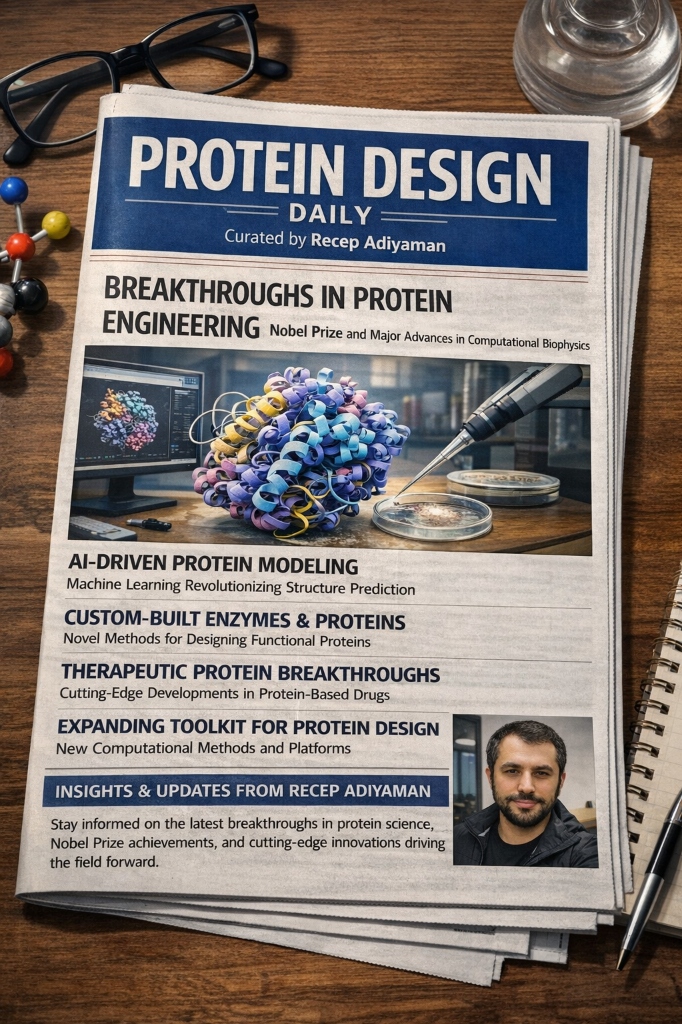
Building something in Protein Design?
I love collaborating on new architectural challenges. Let's build together.
🧬 Protein Design Digest
Curated protein signals by Recep Adiyaman
🚀 Today’s Top Signal
Energy-Driven Innovations in Computational De Novo Protein Engineering.
🧬 Abstract
Energy models play a crucial role in the advancement of computational de novo protein engineering, enabling the design of novel proteins with tailored functionalities. Proteins serve as the foundation of biochemical processes, making their precise engineering essential for applications in biotechnology, medicine, and synthetic biology. Unlike traditional approaches that focus on modifying existing proteins, de novo engineering introduces entirely new constructs, a paradigm shift driven by energy-based strategies that guide protein folding, stability, and functionality through comprehensive simulations of energy landscapes. Computational techniques such as molecular dynamics (MD), thermodynamic integration, and Monte Carlo sampling are fundamental in evaluating designed proteins’ stability and dynamic behavior. Widely used tools such as CHARMM, Amber, and Rosetta leverage advanced energy functions to optimize protein structures, facilitating accurate predictions of folding pathways and binding affinities. Additionally, the integration of machine learning (ML) and deep learning (DL) has significantly improved the speed and precision of energy-based modeling, enhancing the design and optimization process. This review systematically analyzes recent studies, provides quantitative benchmarking of major computational platforms, and presents a decision framework for method selection based on accuracy-cost-throughput trade-offs. By integrating classical force fields, quantum mechanical approaches, and AI-driven predictions with experimental validation, this work outlines a roadmap for advancing therapeutic and industrial protein design through synergistic physics-based and data-driven strategies.
Why it matters: Critical for improving fold accuracy and reducing structural uncertainty in de novo design.
⭐ Additional Signals
Tailored pyrrole-based imidazothiazole scaffolds: Synthetic elaboration, enzyme kinetic profiling and DFT-guided molecular docking toward Antidiabetic therapeutics.
The current research study highlights the successful biological evaluation of novel imidazo-thiadiazole based pyrrole derivatives, with the aim of targeting diabetes mellitus through alpha-amylase and alpha-glucosidase inhibition. These compounds exhibited promising anti-diabetic activity, notably compound 8 emerged as a leading candidate (3.50 ± 0.20, and 4.10 ± 0.10 µM) which outperformed the potential of acarbose (6.20 ± 0.10 and 6.70 ± 0.20 µM), a reference drug. The enhanced biological potential of compound 8 is likely due to incorporation of hydroxyl substituents, which may strengthen its binding affinity and selectivity towards the targeted enzymes. Molecular docking revealed stable interactions with key amino acids residues of targeted enzymes, providing mechanistic basis for its potent inhibitory activity. To further established their therapeutic relevance, enzyme kinetic study was conducted which confirmed their mode of inhibition while ADMET analysis indicated favorable pharmacokinetics and safety profiles. Moreover, pharmacophore modeling and molecular dynamics simulations reinforced the stability and binding efficiency of lead compounds under dynamic biological conditions. All the experimental results and in silico validations demonstrate that potent compounds possess significant anti-diabetic activity profile. Their ability to outperform an existing diabetes mellitus inhibitor and maintaining a favorable safety profile suggest that these compounds have potential to be further used in drug development and optimization against Diabetes Mellitus.
Identification of novel umami peptides in fermented milk and elucidation of their umami mechanism via molecular docking and molecular dynamics simulations.
A streamlined workflow integrating multi-model machine learning, bioinformatics filtering, sensory evaluation, molecular docking and dynamics simulations was applied to mine umami peptides in fermented milk. Based on dual selection criteria-(i) unanimous umami prediction by UMPred-FRL, Umami_YYDS, Umami-MRNN, Mlp4Umami, Umami_TD, (ii) favorable in silico properties (non-toxicity, non-allergenicity, good solubility, stability, potential bioactivity)-ten out of the 1505 peptides identified by peptidomics were shortlisted as umami peptide candidates. Sensory evaluation confirmed that eight imparted an umami taste. Molecular docking revealed that umami peptides interact with TAS1R1/TAS1R3 primarily through hydrogen bonds formed between their hydrophilic residues (predominantly Lys, Tyr) and receptor hydrophilic residues (notably Lys/Arg in TAS1R1, Asn in TAS1R3). Residues Arg307/Met375/Lys379 of TAS1R1, and Arg327/443/Ala329/Val437/Met452 of TAS1R3 were key interaction sites. Molecular dynamics simulations showed that the three peptides with the highest umami taste-EVFTKK, SKKTVDME, VMGVSKVKE-formed stable and compact complexes with TAS1R1/TAS1R3. This work enhances understanding of the umami characteristics of fermented milk.
2-Aminothiophene and 2-aminothiazole scaffolds as potent antimicrobial agents: Design, synthesis, biological evaluation, and computational insights.
The development of new antitubercular drugs is critically hindered by the persistent and adaptive nature of Mycobacterium tuberculosis (Mtb), underscoring an urgent need for innovative therapeutic strategies. In this work, a series of structurally varied 2-aminothiophene and 2-aminothiazole derivatives was designed, synthesized, and characterized using FT-IR, NMR, HRMS, and single-crystal X-ray techniques. The thiophene analogues were prepared via the Gewald reaction, while thiazole derivatives were obtained through Hantzsch synthesis, with structural diversity achieved by modifying alkyl, ester, and fused ring groups. Several compounds exhibited potent antitubercular activity against Mtb H37Rv, with 4h, 4k, and 4l showing MIC values of 0.78 μg/mL, comparable to the standard drug Ethambutol. SAR studies revealed that linear alkyl chains enhanced activity, whereas aryl and fused rings were less favourable. Additionally, compounds 4q, 4s, 7g, 7o, and 9e emerged as moderate antibacterial leads against both Gram-positive and Gram-negative bacteria. Cytotoxicity assays for the potent compounds were performed in Vero cells and THP-1 cells, supporting a favourable safety profile and selective activity against Mtb. Furthermore, target prediction, molecular docking, along with DFT and ADMET analyses, provided valuable insights into their putative molecular targets, binding modes, and the drug-like and electronic properties that influence bioactivity. Collectively, these results identify compound 4k as a promising lead candidate against Mtb, underscoring the potential of the 2-aminothiophene scaffold as a valuable framework for antitubercular drug discovery. These findings encourage further exploration of 2-aminothiophene and 2-aminothiazole scaffolds by medicinal chemists for the development of novel, potent, and selective antitubercular and antibacterial drug candidates.
🧪 AI & Research News
- Will robots rule humans? - metroindia.net: Will robots rule humans? metroindia.net
🏢 Industry Insight & Applications
- USA–Saudi Biotech Alliance Summit Marks a New Era in Healthspan, Immunotherapy, and Global Scientific Partnership - ImmunityBio: USA–Saudi Biotech Alliance Summit Marks a New Era in Healthspan, Immunotherapy, and Global Scientific Partnership ImmunityBio
- From Lab Bench to Breakthrough: How a UT Mentor-Student Partnership Sparked a Rising East Tennessee Biotech Company - UTHSC News: From Lab Bench to Breakthrough: How a UT Mentor-Student Partnership Sparked a Rising East Tennessee Biotech Company UTHSC News
- Pharma Bets Big on AI Platforms with Flurry of New Year Deals - GEN - Genetic Engineering and Biotechnology News: Pharma Bets Big on AI Platforms with Flurry of New Year Deals GEN - Genetic Engineering and Biotechnology News
- Fierce Biotech Fundraising Tracker ‘26: Corxel cashes in $287M; Mendra launches with $82M - Fierce Biotech: Fierce Biotech Fundraising Tracker ‘26: Corxel cashes in $287M; Mendra launches with $82M Fierce Biotech
- USA–Saudi Biotech Alliance Advances Global Immune Medicine - Oncodaily: USA–Saudi Biotech Alliance Advances Global Immune Medicine Oncodaily
- INTENT Biologics Receives FDA Agreement Granting a Full Waiver for its Pediatric Study Plan for PEP Biologic™ in Advanced Wound Care - Business Wire: INTENT Biologics Receives FDA Agreement Granting a Full Waiver for its Pediatric Study Plan for PEP Biologic™ in Advanced Wound Care Business Wire
- Could CRISPR really cure these diseases? - Labiotech.eu: Could CRISPR really cure these diseases? Labiotech.eu
⚡ Quick Reads
Novel imidazolium salts bearing 2-oxindoles scaffold as potent acetylcholinesterase inhibitors for Alzheimer’s disease: Design, synthesis, in vitro and in silico studies.
In this study, a series of thirty-five novel imidazolium salts bearing a 2-oxindoles were designed and synthesized as potent acetylcholinesterase (AChE) inhibitors for Alzheimer’s disease. Structural diversity was introduced through substituent variation on both the oxindole and phenyl rings to investigate structure-activity relationships. All compounds were evaluated in vitro by the modified Ellman assay, revealing several highly potent inhibitors in the nanomolar to subnanomolar range. The most active compound, 32, exhibited an IC50 of 0.17 nM, surpassing galantamine and donepezil. Enzyme kinetic study indicated that all compounds act as mixed-type AChE inhibitors. Machine learning-based binding affinity predictions (ΔGML = -10.30 to -8.18 kcal/mol) correlated well with experimental activity. Molecular docking against AChE (PDB ID: 4EY6 and 7E3H) revealed that compounds bearing electron-withdrawing substituents exhibited superior binding scores and favorable interactions with key catalytic residues and aromatic residues. Molecular dynamics (200 ns) simulations demonstrated that compound 32 maintained a highly stable conformation within the AChE active site, with consistent hydrogen bonding and low root-mean-square deviation (RMSD) fluctuations. In addition, MM-PBSA binding free energy analysis (ΔGtotal = -33.42 kcal/mol) further confirmed its strong and stable interactions compared with galantamine (-17.82 kcal/mol) and donepezil (-21.20 kcal/mol). Furthermore, in silico ADME predictions suggested favorable oral absorption and potential blood-brain barrier permeability for compound 32, while maintaining an acceptable safety profile compared to galantamine and donepezil. These promising findings highlight the potential of oxindole-imidazolium hybrids as effective AChE inhibitors and warrant further investigation for the development of novel anti-Alzheimer agents.
Identification of phosphodiesterase 10 A modulators for neurodegenerative and psychiatric disorders: Combination of physics-based virtual screening and machine learning approaches.
Phosphodiesterase (PDE) is a crucial enzyme that regulates intracellular signal transduction by breaking down cyclic adenosine monophosphate (cAMP) and cyclic guanosine monophosphate (cGMP) into inactive forms. Among the 11 PDE families, PDE10A has gained attention as a potential therapeutic target for neurodegenerative and psychiatric disorders. This study aimed to identify potent inhibitors targeting the active site of PDE10A. A ligand-guided virtual screening method was used to find potential modulators from the ZINCPharmer database. The ligand library was subjected to grid-based molecular docking using AutoDock Vina (ADV) and PLANTS tools. Absolute binding affinity was predicted and refined with KDEEP. The docking protocol was validated by evaluating ADMET properties of sorted compounds using ADMET-AI. Protein-ligand interactions were analyzed with ProteinPlus. The final four compounds ZINC09233950, ZINC19374064, ZINC33686121, and ZINC58090432 showed binding affinities of -9.1, -9.3, -9.7, and -9.3 kcal/mol, respectively. Molecular dynamics (MD) simulations were conducted over 100 ns to assess the stability of the protein-ligand complexes within a cubic water box. The binding free energies of selected compounds were evaluated using the MM-GBSA method, confirming their potential as PDE10A inhibitors. The study identified potential inhibitors and highlighted the value of a ligand-guided drug discovery approach in enhancing specificity and efficacy.
Ternary Complex Geometry and Lysine Positioning Guide the Generation of PROTAC-Induced Degradable Complexes.
Targeted protein degradation via PROTACs (PROteolysis TArgeting Chimaeras) has transformed drug discovery by enabling the elimination of disease-driving proteins, including those previously considered undruggable. However, rational PROTAC design remains hindered by the lack of systematic approaches to evaluate the geometry of ternary complexes, ubiquitination feasibility, and the influence of linker architecture on degradation potential. Here, we present an integrative computational framework that addresses these challenges by combining ternary complex generation, pairwise RMSD-based clustering, full CRL2 VHL RING-like complex modeling, lysine proximity analysis, and structure-guided dynamics. As a representative system, we applied this workflow to PTP1B, a phosphatase implicated in oncogenic signaling yet long considered therapeutically challenging. Over 6900 ternary complex poses were generated across diverse linker designs and systematically filtered using custom Python scripts that automate pose clustering and lysine-to-E2 distance evaluation. Critical ternary complexes were subjected to molecular dynamics simulations, PCA, TICA, and Markov state modeling to reveal degradation-competent conformations and dynamic transitions. We additionally assessed AlphaFold-Multimer and Arg69-guided docking approaches. AlphaFold-Multimer produced few lysine-accessible poses, whereas Arg69-guided docking enriched degradation-competent geometries via biologically relevant interactions. This framework offers a mechanistically grounded and generalizable strategy for rational PROTAC development across protein targets.
De novo protein ligand design including protein flexibility and conformational adaptation.
Motivation The rational design of chemical compounds that bind to a desired protein target molecule is a major goal of drug discovery. Most current molecular docking but also fragment-based build-up or machine-learning based generative drug design approaches employ a rigid protein target structure. Results Based on recent progress in predicting protein structures and complexes with chemical compounds we have designed an approach, AI-MCLig, to optimize a chemical compound bound to a fully flexible and conformationally adaptable protein binding region. During a Monte-Carlo (MC) type simulation to randomly change a chemical compound the target protein-compound complex is completely rebuilt at every MC step using the Chai-1 protein structure prediction program. Besides compound flexibility it allows the protein to adapt to the chemically changing compound. MC-protocols based on atom/bond type changes or based on combining larger chemical fragments have been tested. Simulations on three test targets resulted in potential ligands that show very good binding scores comparable to experimentally known binders using several different scoring schemes. The MC-based compound design approach is complementary to existing approaches and could help for the rapid design of putative binders including induced fit of the protein target. Availability and implementation Datasets, examples and source code are available on our public GitHub repository https:/github.com/JakobAgamia/AI-MCLig and on Zenodo at https://doi.org/10.5281/zenodo.17800140.
Primary Osteoarthritis of the Sternoclavicular Joint: Surgical Management Using the Sternal Docking Technique.
Dislocation of the sternoclavicular joint (SCJ) is the most common SCJ condition reported to be managed surgically. However, primary SCJ osteoarthritis is substantially more common. There are few reports in the literature on the outcome of surgical management of primary SCJ osteoarthritis. We have successfully adopted sternal docking allograft reconstruction for SCJ instability and have now expanded the technique to patients with primary SCJ osteoarthritis. This is our first report on the outcome of the sternal docking technique specifically for patients with primary SCJ osteoarthritis. Between 2012 and 2023, one fellowship trained shoulder surgeon consecutively performed surgical resection of the medial end of the clavicle and semitendinosus allograft ligament reconstruction using the sternal docking technique in 29 patients with SCJ osteoarthritis. Seven patients were lost to follow-up (one declined participation, and six could not be contacted). The remaining 22 patients form the study cohort. There were 17 females and 5 males with a mean age of 49 ± 11 years at the time of surgery (range, 32-71 years). Their electronic medical records were reviewed to collect demographics, pain using a Visual Analog Scale (VAS), complications and reoperations. Patients were also contacted at most recent follow-up to record VAS for pain, subjective shoulder value (SSV) and American Shoulder and Elbow Surgeons (ASES) shoulder score. The procedure was considered successful when patients experienced pain relief and did not develop any complications or required reoperation. The mean length of follow-up was 4 ± 3 (range, 1-12) years. SCJ reconstruction was associated with significantly improved pain relief and overall shoulder function. Preoperatively, the mean VAS was 6 ± 1.5 (range, 4-9) points. At the most recent follow-up, the mean pain score was 0.5 ± 1.5 (range, 0-6) points, with median scores of 90 (IRQ 60-98) for SSV and 80 (IQR 70-81) points for ASES. 21 of 22 patients reported high satisfaction rates with their postoperative outcomes, with one patient endorsing partial satisfaction due to limited shoulder range of motion. Persistent peri-incisional numbness was reported by one patient. There were no re-operations at the time of the most recent follow-up. Medial clavicle resection and ligament reconstruction seems to be associated with good overall outcomes, a high degree of patient satisfaction, and a low reoperation rate in patients with primary SCJ OA.
Computational studies of target-specific radiopharmaceuticals for theranostics.
Radiopharmaceuticals are key tools in nuclear medicine, enabling both diagnostic imaging and targeted therapy for conditions such as cancer and neurological disorders. The integration of computational techniques in the drug-discovery process, such as molecular docking and molecular dynamics simulations, contributes to the development of this class of compounds. Here we review recent computational studies on radiopharmaceuticals acting on different targets: receptors, enzymes, and transporters. Several receptors such as chemokine receptor 4, neurokinin-1, metabotropic glutamate receptor, and gastrin-releasing peptide receptor have been investigated using molecular simulations to optimize ligand binding and enhance receptor targeting. Enzymes like prostate-specific membrane antigen and fibroblast activation protein α have been investigated in silico for their interaction with novel radiopharmaceutical inhibitors. Additionally, transporter proteins such as glucose transporters have been explored for their role in cancer metabolism and imaging applications. Advanced computational studies, including quantum mechanics calculations and free energy estimations, have contributed to our understanding of radiopharmaceutical binding modes and stability at the molecular level of detail. The review highlights the potential of computational approaches for cost-effective design of next-generation theranostic agents, emphasizing the importance of molecular databases in ligand-based drug discovery and artificial intelligence-based drug design.
Effect of acyl donors on EGCG esterification reaction catalyzed by Lipase “Amano” 30SD based on molecular dynamics analysis.
Enzymatic esterification of (-)-epigallocatechin gallate (EGCG) can improve its lipophilicity and promote its utilization, but acyl donors significantly affect the catalytic efficiency and selectivity of lipase in EGCG esterification. This study utilized food-grade Lipase “Amano” 30SD to catalyze the reaction between EGCG and different acyl donors. The yields and esterification sites of EGCG esterification products were analyzed using HPLC and MS. Molecular docking and molecular dynamics were used to further investigate the effect of acyl donor on catalytic efficiency and regioselectivity of Lipase “Amano” 30SD in EGCG esterification by establishing acyl-lipase models. Results showed that the yield of acetyl-EGCG was the highest (76.55 ± 3.45 %), while the selectivity of lauroyl-EGCG was the best with mono-substituted lauroyl-EGCG accounting for >80 %. Molecular dynamics and molecular docking revealed that acyl donors can enhanced the overall structural stability and active site flexibility of Lipase “Amano” 30SD, contributing to its catalytic efficiency. In acyl-Lipase “Amano” 30SD models, Gly122 can form H-bonds with the B-ring hydroxyl groups of EGCG, stabilizing the conformation of EGCG-Lipase “Amano” 30SD complexes to promote selective esterification of D-ring hydroxyl groups. This study promotes the understanding of enzymatic EGCG esterification and provides guidance for lipase catalytic selectivity and acyl donor selection.
Rational design of peptide-based programmed cell death 1 immune checkpoint inhibitors using advanced integrated computational approach.
The programmed cell death protein 1 (PD-1) and its ligand, programmed cell death ligand 1 (PD-L1), constitute a critical immune checkpoint axis frequently exploited by cancer cells to evade immune detection. Although monoclonal antibodies targeting this pathway have demonstrated clinical efficacy, their limitations have prompted the exploration of alternative inhibitors such as peptides. This study employed an integrated in silico approach to design and evaluate novel peptide inhibitors of PD-1. A diverse peptide library was created by combining the PD-L1-derived peptide fragments with experimentally validated anticancer peptides. Structural modeling, followed by virtual screening, rational point mutations, and molecular docking, has enabled the identification of candidates with enhanced PD-1 binding affinity. The therapeutic potential of these candidates was further evaluated using toxicity and allergenicity predictions, molecular dynamics simulations, steered molecular dynamics, and umbrella sampling. Pep872_mod392 9 (named) has emerged as a potent PD-1 inhibitor, exhibiting the highest binding affinity, lowest dissociation constant, and ability to effectively disrupt the PD-1/PD-L1 interaction. Structural analyses revealed that Pep872_mod392 forms extensive interactions with PD-1, effectively blocking PD-L1 binding. Molecular dynamics simulations confirmed the stability and thermodynamic favorability of this interaction. The findings of this study provide a solid foundation for further experimental validation and optimization of Pep872_mod392 as a potential therapeutic agent in cancer immunotherapy. The success of this strategy in identifying potent PD-1 inhibitors suggests its potential applicability to other immune checkpoints and protein-protein interactions of therapeutic interest.
💡 Pipeline Tip
Always validate pLDDT scores before using AlphaFold models for docking.
🛠️ Resources
- Dataset: UniRef - Clustered protein sequence sets for fast similarity searches.
- Dataset: BFD - Big Fantastic Database for deep learning protein modeling.
- Tool: Rosetta - Protein modeling, docking, and design suite. View all tools →
- Tool: AutoDock Vina - Molecular docking for ligand screening and scoring. View all tools →
- Event: Protein Design Hub (LinkedIn Group) (Ongoing)
- Event: Structural Biology Events (Open)
- Job: Jack Link’s Protein Snacks Housekeeper - SmartRecruiters at SmartRecruiters
- Job: Eurofins Protein Purification Analytical Scientist - SmartRecruiters at SmartRecruiters
The protein structure is the language of life; design is its poetry. — Recep Adiyaman