Issue #45: De novo protein design: a transformative frontier in clinical protein applications.
Protein Design Digest - 2026-02-11 - A New Insight into the Study of Neural Cell Adhesion Molecule (NCAM) Polysialylation Inhibition Incorporated the Molecular Docking Models into the NMR Spectroscopy of a Crucial Peptide-Ligand Interaction.
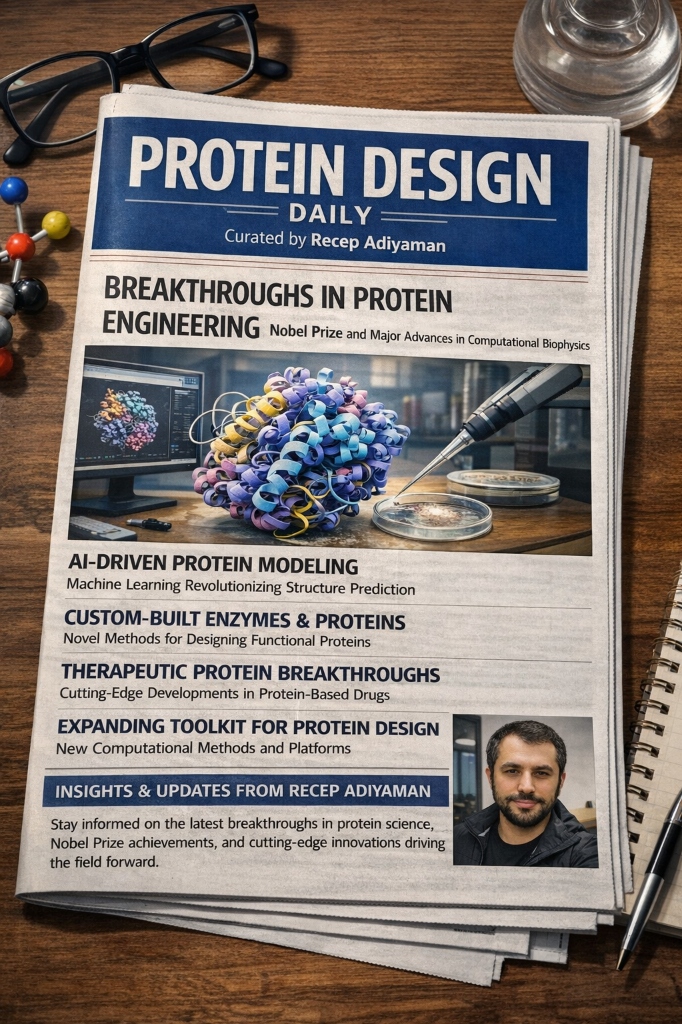
Building something in Protein Design?
I love collaborating on new challenges. Let's build together.
Subscribe to Protein Design Digest
Daily curated signals from arXiv, PubMed, and BioRxiv.
Signal of the Day
De novo protein design: a transformative frontier in clinical protein applications.
Background Protein biologics are indispensable in disease prevention, diagnosis, and therapy, yet their development remains largely constrained by reliance on native protein scaffolds, resulting in long development timelines, limited structural and functional tunability, challenges in manufacturing consistency, and high production costs. Main body De novo protein design moves beyond the structural and functional constraints inherent to traditional approaches, enabling the direct creation of proteins with tailored structures and functions and offering a new avenue to address these challenges. In this review, we summarize the principal computational strategies underlying de novo protein design and the contribution of deep learning to its recent progress, and highlight prospective applications, major translational barriers, and the current limitations and future challenges of the field. Conclusions Despite notable methodological progress in de novo protein design, its path toward clinical application continues to be limited by a range of biological, technical, and translational considerations. Future work will need closer coordination between computational design, experimental validation, engineering optimization, and clinical needs, with clinical feasibility considered early and refined throughout development.
Why this matters:
Also Worth Reading
Investigation of the potential mechanism by which methylparaben induces psoriasis: an integrated study using network toxicology, molecular docking, molecular dynamics simulation, and eight machine learning algorithms.
Psoriasis is a chronic inflammatory skin disease with limited safe and effective treatments. Methylparaben, a widely used preservative in cosmetics, pharmaceuticals, and food, is an emerging environmental pollutant linked to immune-related skin disorders, but its role and mechanism in psoriasis remain unclear. This study explored its potential mechanism using network toxicology, molecular docking, molecular dynamics simulation, and eight machine learning algorithms. Methylparaben targets were retrieved from GeneCards and TCMSP, and psoriasis-related targets from CTD and GeneCards. Overlapping targets were screened with Venny 2.1.0. A PPI network was constructed via STRING, and core targets identified using Cytoscape 3.10.2. GO and KEGG enrichment analyses were performed on DAVID. Molecular docking evaluated the binding affinity of methylparaben with key targets. A total of 138 compound-related and 5,592 psoriasis-related targets were identified. Core targets such as INS, HIF1A, and PPARG are involved in regulating immune-inflammatory responses, keratinocyte proliferation and differentiation, and oxidative stress. GO analysis revealed enrichment in xenobiotic metabolism, lipopolysaccharide response, and metal ion binding. KEGG analysis highlighted pathways related to cancer, chemical carcinogenesis from reactive oxygen species, and drug metabolism via cytochrome P450 enzymes. Molecular docking showed stable binding of methylparaben to INS (-4.5 kcal/mol), HIF1A (-5.9 kcal/mol), and PPARG (-5.5 kcal/mol), primarily through hydrogen bonds and hydrophobic interactions. Methylparaben may exert its effects on psoriasis via multi-target and multi-pathway mechanisms, influencing inflammation, oxidative stress, and cellular regulation. These findings provide valuable insight into its toxicological mechanism and potential therapeutic application.
Innovative Approaches in Molecular Docking for the Discovery of Novel Inhibitors Against Alzheimer’s Disease.
Introduction Alzheimer’s disease (AD) is a debilitating neurodegenerative condition marked by progressive cognitive decline and memory impairment, affecting millions worldwide. Despite extensive research, no definitive cure exists, underscoring the need for innovative approaches to drug discovery and development. Methods This review focuses on the application of molecular docking techniques in the context of AD drug discovery. The methodology involves the use of computational modeling tools to predict and analyze the interactions between small drug-like molecules and key protein targets implicated in AD pathogenesis, particularly amyloid-beta (Aβ) and tau proteins. Results Molecular docking has enabled the virtual screening of large chemical libraries to identify potential inhibitors of Aβ aggregation and tau hyperphosphorylation. Numerous studies have validated docking-predicted interactions with in vitro and in vivo experiments, resulting in the discovery of novel compounds with promising pharmacological profiles. Docking has also aided in the optimization of ligand binding affinity and selectivity toward AD-relevant targets. Discussion The integration of molecular docking with experimental techniques enhances the reliability and efficiency of the drug discovery process. Docking allows for the early identification of bioactive molecules, reducing time and cost compared to traditional methods. However, limitations such as rigid receptor assumptions and scoring function inaccuracies require further refinement. Conclusion Molecular docking stands out as a powerful computational tool in the quest for effective AD therapies. Simulating protein-ligand interactions accelerates the identification of potential drug candidates and supports the rational design of targeted interventions, paving the way for future clinical applications in combating Alzheimer’s disease.
Advancing Drug Repurposing for Rheumatoid Arthritis: Integrating Protein-Protein Interaction, Molecular Docking, and Dynamics Simulations for Targeted Therapeutic Approaches.
Background : Rheumatoid arthritis (RA) is a systemic chronic inflammatory autoimmune disease causing progressive joint destruction, resulting in significant morbidity and increased mortality. Despite advances in treatment, current pharmacological options, including NSAIDs, DMARDs, and biological agents, have limitations in tissue repair and can lead to severe side effects. Objectives : This study aims to explore drug repurposing as a viable approach to identify novel therapeutic agents for RA by utilizing existing FDA-approved drugs. Methods : We applied an integrated computational strategy that uniquely combines network pharmacology with molecular docking and dynamics simulations. The process began with the construction of a protein-protein interaction (PPI) network from 2723 RA-associated genes, which identified five central targets: TNF-α, IL-6, IL-1β, STAT3, and AKT1. We then built protein-drug interaction (PDI) networks by screening 2637 FDA-approved drugs against these targets. Critically, the top candidates from this network analysis were not just docked but were further validated using 100 ns molecular dynamics simulations to thoroughly evaluate binding affinity, complex stability, and interaction dynamics. Results : This multi-tiered computational workflow identified Rifampicin, Telmisartan, Danazol, and Pimozide as the most promising repurposing candidates. They demonstrated strong binding affinities and, importantly, formed stable complexes with TNF-α, IL-6, IL-1β, and STAT3, respectively, in dynamic simulations. The key innovation of this study is this sequential funnel approach, which integrates large-scale network data with atomic-level simulation to prioritize high-confidence drug candidates for RA. Conclusions : In conclusion, this study highlights the potential of repurposing FDA-approved drugs to target key proteins involved in RA, offering a cost-effective and time-efficient strategy to discover new therapies.
Research & AI Updates
- AI Swiftly Unlocks Biomolecule Structures From Complex Cryo-Em Data - Quantum Zeitgeist — AI Swiftly Unlocks Biomolecule Structures From Complex Cryo-Em Data Quantum Zeitgeist.
- Isomorphic claims major advance with new AI drug design engine, in ‘step change’ versus AlphaFold 3 - Endpoints News — Isomorphic claims major advance with new AI drug design engine, in ‘step change’ versus AlphaFold 3 Endpoints News.
- Google’s AI drug discovery spinoff Isomorphic Labs claims major leap beyond AlphaFold 3 - the-decoder.com — Google’s AI drug discovery spinoff Isomorphic Labs claims major leap beyond AlphaFold 3 the-decoder.com.
- Google’s Drug Discovery Arm Isomorphic Labs Doubles Accuracy In Designing Medicines Through A Computer In New Breakthrough - OfficeChai — Google’s Drug Discovery Arm Isomorphic Labs Doubles Accuracy In Designing Medicines Through A Computer In New Breakthrough OfficeChai.
- Biological insights of the future come from cryoEM today - Penn Medicine — Biological insights of the future come from cryoEM today Penn Medicine.
- Freeze, image, cure - Penn Medicine — Freeze, image, cure Penn Medicine.
From the Industry
- South Korea AI biotech Galux raises $29m in series B - Tech in Asia — South Korea AI biotech Galux raises $29m in series B Tech in Asia.
- FDA Modernizes Draft Guidance on Statistical Methods to Support Clinical Trial Data - JD Supra — FDA Modernizes Draft Guidance on Statistical Methods to Support Clinical Trial Data JD Supra.
- AI in drug discovery: 2025 in review - Drug Target Review — AI in drug discovery: 2025 in review Drug Target Review.
- Takeda, Iambic Launch Up-to-$1.7B AI Collaboration - Genetic Engineering and Biotechnology News — Takeda, Iambic Launch Up-to-$1.7B AI Collaboration Genetic Engineering and Biotechnology News.
- Biologics License Application for Subcutaneous Formulation of “LEQEMBI®” (lecanemab) for the Treatment of Early Alzheimer’s Disease Designated for Priority Review in China - Biogen — Biologics License Application for Subcutaneous Formulation of “LEQEMBI®” (lecanemab) for the Treatment of Early Alzheimer’s Disease Designated for Priority Review in China Biogen.
- A sign biotech is back? Four drugmakers go public, raising nearly $1 billion in all - statnews.com — A sign biotech is back? Four drugmakers go public, raising nearly $1 billion in all statnews.com.
- Agomab goes public on Nasdaq as biotech IPOs top $1bn in a single week - European Biotechnology Magazine — Agomab goes public on Nasdaq as biotech IPOs top $1bn in a single week European Biotechnology Magazine.
Quick Reads
Enhancing Antioxidant and Anti-Inflammatory Activities of ESIntraPT/ESInterPT-Type 6-Methoxyflavone: Insights from DFT/TD-DFT, Molecular Docking, and Molecular Dynamics Simulations.
Development of antioxidant-type anti-inflammatory inhibitors is essential to mitigate free radical-mediated inflammatory damage, where natural flavonoids with multiple bioactivities are promising candidate compounds. Read more →
Unveiling Molecular Mechanisms and Salient Targets in Phthalates-Induced Neurodevelopmental Disorders Through Comprehensive Network Toxicology and Molecular Docking Strategy.
Phthalates are well-known emerging contaminants in the environment and food packaging, posing serious risks to human health as endocrine disruptors with significant neurotoxic potential. Read more →
In Silico Assessment of <i>Silybum marianum</i> Bioactive Compounds in Prostate Cancer Using Network Pharmacology and Molecular Docking.
Objectives Prostate cancer is a globally prevalent malignancy with rising resistance to conventional therapies. Read more →
Integrated network pharmacology and molecular docking reveal multi-target hepatotoxic mechanisms of Xanthii fructus.
Xanthii fructus (XF), a traditional Chinese medicine, is commonly used for anti-inflammatory and analgesic purposes; however, its hepatotoxicity limits its use to some extent and the underlying mechanisms remain unclear. Read more →
Exploring the Mechanism of Nicotine on Human Chronic Wounds Based on Network Toxicology and Molecular Docking.
BackgroundChronic wounds represent a pathological state characterized by failure to heal within the normal timeframe, often accompanied by infection, high recurrence rates, and treatment challenges. Read more →
De novo protein design: a transformative frontier in clinical protein applications.
Background Protein biologics are indispensable in disease prevention, diagnosis, and therapy, yet their development remains largely constrained by reliance on native protein scaffolds, resulting in long development timelines, limited structural and functional tunability, challenges in manufacturing consistency, and high production costs. Read more →
Exploring the Therapeutic Potential and Underlying Mechanism of Callerya speciosa in Ankylosing Spondylitis: Network Pharmacology, Molecular Docking, and Single-Cell Sequencing.
Introduction: Callerya speciosa (C. Read more →
Exploring the Mechanism of Huachansu Injection for Lung Cancer Based on Network Pharmacology and Molecular Docking.
Introduction Huachansu injection (HCSI), a clinical traditional Chinese medicine (TCM) preparation, is used to treat non-small cell lung cancer (NSCLC), but the mechanisms of its core components (bufadienolides) remain to be further elucidated. Read more →
Pipeline Tip
Check for missing residues in PDB files using PDB-Fixer before simulation.
Resources & Tools
- Dataset: MGnify - Metagenomics resource for microbiome sequence data.
- Dataset: PDBbind - Binding affinity data with 3D structures of protein-ligand complexes.
- Tool: AlphaFold2 - Deep learning system for high-accuracy protein structure prediction. View all tools →
- Tool: ColabFold - Fast AlphaFold2/MMseqs2 pipeline for large-scale predictions. View all tools →
- Event: Protein Design Hub (LinkedIn Group) (Ongoing)
- Event: Structural Biology Events (Open)
- Job: Project leader in cryo-electron tomography - Structural Biology Platform - Indeed at Indeed Jobs
- Job: Bioinformatics Scientist / Data Scientist - Indeed at Indeed Jobs
The protein structure is the language of life; design is its poetry. — Recep Adiyaman