Issue #53: Predicting the active sites of quinolone antibiotics interacting with organisms by deep learning and molecular docking.
Protein Design Digest - 2026-02-23 - Discovery of potent ALK tyrosine kinase inhibitors for thyroid cancer via machine learning modeling, molecular docking, MD simulations, and DFT study.
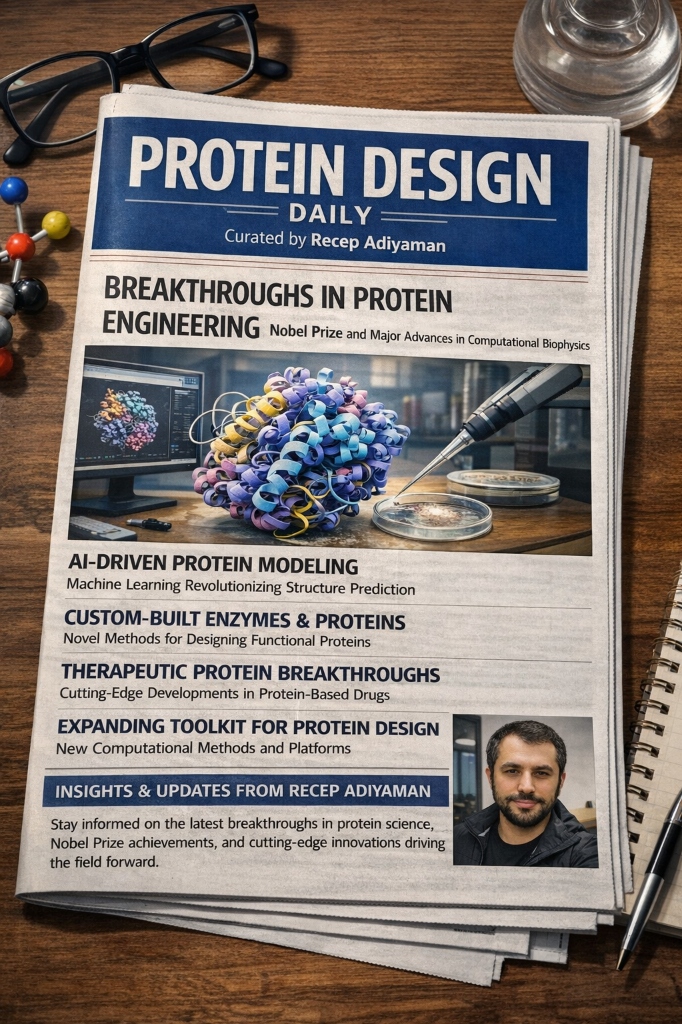
Building something in Protein Design?
I love collaborating on new challenges. Let's build together.
Subscribe to Protein Design Digest
Daily curated signals from arXiv, PubMed, and BioRxiv.
Signal of the Day
Predicting the active sites of quinolone antibiotics interacting with organisms by deep learning and molecular docking.
Quinolones (QNs) antibiotics have become one of the most commonly used antibacterial drugs for human and animals in the world. In this study, we focused on 19 common quinolone (QN) antibiotics and collected their bioassay activity data from the PubChem website. Subsequently, using deep learning techniques, we constructed 45 biological activity prediction models based on the PubChem BioAssay dataset. The prediction accuracy of all models exceeded 95%, with the exception of the model for CCRIS mutagenicity studies, which achieved an accuracy of 85.22 ± 0.17%. Collectively, these deep learning models can serve as reliable tools for the prediction and evaluation of quinolone antibiotics. The bioassay activity of 19 QNs antibiotics was predicted by developed models to fill in the missing activity data. It was found that QNs antibiotics were generally active against bacterial DNA repair enzymes and neurobehavioral related protein, including hypothetical protein HP1089, recBCD - exodeoxyribonuclease V subunit RecBCD, recombination protein RecB and SLC5A7. Molecular dynamics simulation results showed that all fluoroquinolone complexes with HP1089, recBCD, RecB, and SLC5A7 reached stable conformations after an initial 0-10 ns relaxation, Our research provides a theoretical basis and technical support for elucidating the regulatory mechanisms of organisms in response to environmental exogenous chemicals, the formulation of environmental protection and food safety policies, the risk assessment of novel compounds, and the development of eco-friendly pharmaceuticals.
Why this matters:
Also Worth Reading
Investigation of the potential mechanism by which methylparaben induces psoriasis: an integrated study using network toxicology, molecular docking, molecular dynamics simulation, and eight machine learning algorithms.
Psoriasis is a chronic inflammatory skin disease with limited safe and effective treatments. Methylparaben, a widely used preservative in cosmetics, pharmaceuticals, and food, is an emerging environmental pollutant linked to immune-related skin disorders, but its role and mechanism in psoriasis remain unclear. This study explored its potential mechanism using network toxicology, molecular docking, molecular dynamics simulation, and eight machine learning algorithms. Methylparaben targets were retrieved from GeneCards and TCMSP, and psoriasis-related targets from CTD and GeneCards. Overlapping targets were screened with Venny 2.1.0. A PPI network was constructed via STRING, and core targets identified using Cytoscape 3.10.2. GO and KEGG enrichment analyses were performed on DAVID. Molecular docking evaluated the binding affinity of methylparaben with key targets. A total of 138 compound-related and 5,592 psoriasis-related targets were identified. Core targets such as INS, HIF1A, and PPARG are involved in regulating immune-inflammatory responses, keratinocyte proliferation and differentiation, and oxidative stress. GO analysis revealed enrichment in xenobiotic metabolism, lipopolysaccharide response, and metal ion binding. KEGG analysis highlighted pathways related to cancer, chemical carcinogenesis from reactive oxygen species, and drug metabolism via cytochrome P450 enzymes. Molecular docking showed stable binding of methylparaben to INS (-4.5 kcal/mol), HIF1A (-5.9 kcal/mol), and PPARG (-5.5 kcal/mol), primarily through hydrogen bonds and hydrophobic interactions. Methylparaben may exert its effects on psoriasis via multi-target and multi-pathway mechanisms, influencing inflammation, oxidative stress, and cellular regulation. These findings provide valuable insight into its toxicological mechanism and potential therapeutic application.
scDock: Streamlining drug discovery targeting cell-cell communication via scRNA-seq analysis and molecular docking
Summary Identifying drugs that target intercellular communication networks represents a promising therapeutic strategy, yet linking single-cell RNA sequencing (scRNA-seq) analysis to structure-based drug screening remains technically challenging and requires substantial bioinformatics expertise. We present scDock, an integrated and user-friendly pipeline that seamlessly connects scRNA-seq data processing, cell–cell communication inference, and molecular docking-based drug discovery. Through a single configuration file, users can execute the complete workflow, from raw scRNA-seq data to ranked drug candidates, without programming skills. scDock automates the identification of disease-relevant ligand–receptor interactions from scRNA-seq data and perfoms structure-based virtual screening against these communication targets using Protein Data Bank (PDB) or AlphaFold-predicted protein structures. The pipeline generates comprehensive outputs at each stage, enabling users to explore intercellular signaling alterations and discover therapeutic compounds targeting specific cell–cell communications. scDock addresses a critical gap by providing an accessible end-to-end solution for communication-targeted drug discovery from single-cell data. Availability and Implementation scDock is freely available at https://github.com/Andrewneteye4343/scDock . It is implemented in R, Python, shell scripts, and supports Linux systems, including Ubuntu and Debian.
Corrigendum to “Comparison on inhibitory effect and mechanism of inhibitors on sPPO and mPPO purified from ‘Lijiang snow’ peach by combining multispectroscopic analysis, molecular docking and molecular dynamics simulation” [Food Chem. 400 (2023) 134048].
Research & AI Updates
- DeepMind Spin-Off Unveils Proprietary ‘AlphaFold 4’-Scale AI, Sparking Excitement and Secrecy Concerns in Drug Discovery - ekhbary.com — DeepMind Spin-Off Unveils Proprietary ‘AlphaFold 4’-Scale AI, Sparking Excitement and Secrecy Concerns in Drug Discovery ekhbary.com.
From the Industry
- Fierce Pharma Asia—Gilead’s synthetic lethality deal; A Tokyo biotech IPO; Novo’s Ozempic China sales dip - Fierce Pharma — Fierce Pharma Asia—Gilead’s synthetic lethality deal; A Tokyo biotech IPO; Novo’s Ozempic China sales dip Fierce Pharma.
- Biologics and other world-class therapies keep pro athletes and ‘weekend warriors’ at the top of their game - UCLA Health — Biologics and other world-class therapies keep pro athletes and ‘weekend warriors’ at the top of their game UCLA Health.
- Experts react to FDA’s shift to single pivotal trials for most drugs - Regulatory Affairs Professionals Society | RAPS — Experts react to FDA’s shift to single pivotal trials for most drugs Regulatory Affairs Professionals Society | RAPS.
- Novartis, UNP, Launch Up-to-$1.8B+ Macrocyclic Peptide Partnership - GEN - Genetic Engineering and Biotechnology News — Novartis, UNP, Launch Up-to-$1.8B+ Macrocyclic Peptide Partnership GEN - Genetic Engineering and Biotechnology News.
- Novartis taps macrocycle biotech in $1.7B cardiovascular deal - FirstWord Pharma — Novartis taps macrocycle biotech in $1.7B cardiovascular deal FirstWord Pharma.
- Novartis finds natural partner in macrocycle biotech, inking $1.7B-plus cardio deal - Fierce Biotech — Novartis finds natural partner in macrocycle biotech, inking $1.7B-plus cardio deal Fierce Biotech.
- First Patients Dosed in Alphyn Biologics’ Phase 2 Trial of First-in-Class Topical Therapeutic for Molluscum Contagiosum - PR Newswire — First Patients Dosed in Alphyn Biologics’ Phase 2 Trial of First-in-Class Topical Therapeutic for Molluscum Contagiosum PR Newswire.
Quick Reads
A hardware demonstration of a universal programmable RRAM-based probabilistic computer for molecular docking.
Molecular docking is a critical computational strategy in drug discovery, but the diversity of biomolecular structures and flexible binding conformations create an enormous search space that challenges conventional computing. Read more →
Anti-malarial evaluation of some bioactive plant compounds: An integrated computational approach combining QSAR and molecular docking.
Malaria remains a major global health burden and motivates the search for new antiplasmodial chemotypes. Read more →
Predicting the active sites of quinolone antibiotics interacting with organisms by deep learning and molecular docking.
Quinolones (QNs) antibiotics have become one of the most commonly used antibacterial drugs for human and animals in the world. Read more →
Integrating machine learning and molecular simulations for the design of potent HDAC2 inhibitors in diffuse large B-cell lymphoma.
Histone deacetylase 2 (HDAC2) plays a critical role in the pathogenesis of diffuse large B-cell lymphoma (DLBCL), positioning it as an attractive therapeutic target. Read more →
Synthesis, in vitro antimicrobial activity and docking studies of novel 1,2,4-oxadiazol based piperidin-1-yl-methanone analogues.
A set of novel 1,2,4-oxadiazol based piperidin-1-yl-methanone analogues (5a-k) was synthesized from 3-phenyl-5-(4-(piperidin-4-yl)phenyl)-1,2,4-oxadiazole (3) via a sequential hydrolysis, cyclization and the Schotten-Baumann reaction. Read more →
Comparative Binding Dynamics of Minibinder 8.6 and HBD3 With TLR3 as Adjuvants for Developing a Peptide-Based Multi-Epitope Subunit Vaccine Against mCRPC: A Molecular Dynamics Study.
Metastatic castration resistance prostate cancer (mCRPC) is the advanced state of prostate cancer where majority of patients succumb to ineffective treatment perspectives like androgen deprivation alongside salvage therapies. Read more →
Identifying the potential anti-lung cancer targets of Baicalein using a network pharmacology approach.
Background Lung cancer remains the deadliest malignancy globally. Read more →
Network Pharmacology-Based Analysis and In Vitro Experiments Validation Reveal Tormentic Acid Induces Apoptosis via PI3K/AKT/HSP90 Pathway in HepG2 Cells.
Tormentic acid (TA) has demonstrated potential anti-hepatocellular carcinoma (HCC) effects. Read more →
Pipeline Tip
Pin reference genomes by checksum to avoid version drift.
Resources & Tools
- Dataset: UniRef - Clustered protein sequence sets for fast similarity searches.
- Dataset: BFD - Big Fantastic Database for deep learning protein modeling.
- Tool: GROMACS - High-performance molecular dynamics engine. View all tools →
- Tool: OpenMM - GPU-accelerated molecular simulation toolkit. View all tools →
- Event: Protein Design Hub (LinkedIn Group) (Ongoing)
- Event: Structural Biology Events (Open)
- Job: Postdoctoral Fellow - P Znamenskiy lab job with Francis Crick Institute | 12854646 - Nature at Nature Careers
- Job: Orthologue inference-based enzyme mining for diversification of the anti-cancer evodiamine scaffold - Nature at Nature Careers
The protein structure is the language of life; design is its poetry. — Recep Adiyaman