Issue #74: Best Practices in Mixed-Solvent Molecular Dynamics and Solvent-Site-Biased Docking.
Protein Design Digest - 2026-03-24 - Enhancing CYP450-Ligand Binding Predictions: A Comparative Analysis of Ligand-Based and Hybrid Machine Learning Models.
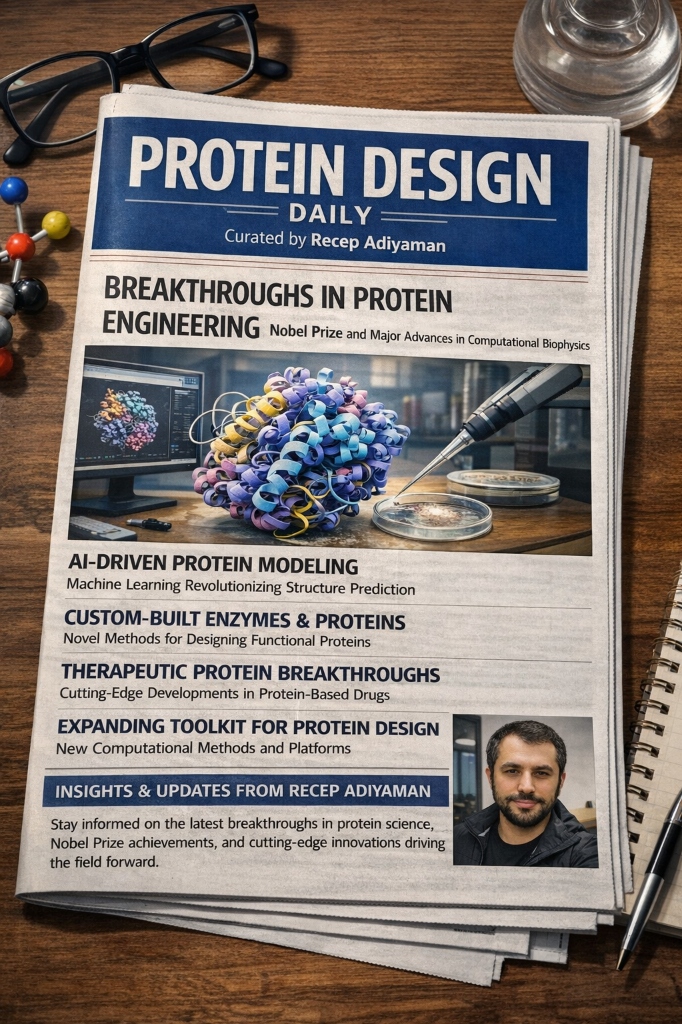
Building something in Protein Design?
I love collaborating on new challenges. Let's build together.
Subscribe to Protein Design Digest
Daily curated signals from arXiv, PubMed, and BioRxiv.
Signal of the Day
Best Practices in Mixed-Solvent Molecular Dynamics and Solvent-Site-Biased Docking.
In this work, we present practical recommendations for the setup, analysis, and integration of mixed-solvent molecular dynamics (MixMD), solvent-biased docking (SSBD) workflows and pharmacophore analysis, drawing on more than a decade of accumulated experience in the field from multiple implementations and applications. Rather than providing a comprehensive review of all applications of MixMD, this Perspective focuses specifically on its use as a methodological foundation for deriving solvent sites that inform docking and pharmacophore-based strategies in structure-based drug design. Currently, mixed-solvent simulations and solvent-biased docking constitute a coherent, experimentally validated strategy for identifying and exploiting binding hot spots in proteins, and for translating solvent occupancy patterns into structurally interpretable pharmacophoric features and docking constraints. By standardizing best practices, and synthesizing previously published computational studies into a unified methodological framework, we aim to facilitate broader adoption of these methods within the structure-based drug design community, enabling more reliable identification of functional sites and accelerating rational ligand discovery.
Why this matters:
Also Worth Reading
Predicting the Mechanism of Action of Bawei Chufan Soup in Treating Teen Depression through Network Pharmacology, Molecular Docking and Molecular Dynamics Simulation.
Introduction The Bawei Chufan Soup (BWCFS) in Traditional Chinese Medicine (TCM) offers unique advantages in treating Teen Depression (TD). This study utilizes network pharmacology, molecular docking, and molecular dynamics simulations to predict the material basis and mechanism of action of the decoction. Methods The TCMSP, SwissADME, and SwissTargetPrediction databases were utilized to obtain the active ingredients and targets of the BWCFS. The GeneCards, OMIM, and Disgenet databases were used to identify disease targets, and the intersection of these sets was determined using the VENNY tool. The intersecting targets were imported into the String database for protein- protein interaction analysis and the screening of core targets. GO and KEGG enrichment analyses of the intersecting targets were conducted using the David database, and drugcomponent- target-pathway network diagrams were constructed using Cytoscape 3.10.0 software. The molecular docking models of the core components and key targets were generated using AutoDock Vina, and kinetic simulations were conducted using GROMACS 2020.3, paired with the best docking models. Results After screening, the study identified the core components of BWCFS as Baicalein, Kaempferol, Quercetin, Cerevisterol, and Cavidine, with the key targets for TD being AKT1, IL6, TNF, ESR1, and IL1B. GO enrichment analysis revealed that BWCFS may affect signal transduction in the treatment of TD, and is associated with cellular components such as the plasma membrane and dendrites, as well as the regulation of protein binding. KEGG analysis suggested that the intersecting genes are primarily enriched in the cyclic adenosine monophosphate (cAMP) signaling pathway. Molecular docking results indicated that AKT1 shows good binding affinity with Baicalein, Cavidine, Kaempferol, and Quercetin, while Cerevisterol exhibits strong binding with TNF. The molecular dynamics simulations were stable and reliable. During the protein-ligand complex simulation, the binding between the protein and ligand was stable, with van der Waals interactions as the primary force, while hydrogen bonds were present between both the protein and ligand. Discussion Though this study has several common limitations associated with network pharmacology, and no animal experiments have been conducted for verification, the study has successfully explored and validated the mechanism of action of BWCFS in treating TD using scientific computational methods. This study provides new perspectives and methods for the development and management of pharmacological treatments for TD, offering innovative insights into TCM approaches for its treatment. Conclusion Through network pharmacology, this study preliminarily predicted the material basis and mechanism of action of BWCFS in treating TD. Furthermore, the therapeutic effects of BWCFS on TD may be associated with neuroinflammation and structural and functional changes in neuronal dendrites. The cAMP-PKA-NF-κB and cAMP-PI3K-AKT-NF-κB pathways are proposed as potential therapeutic targets.
MetalloDock: Decoding Metalloprotein-Ligand Interactions via Physics-Aware Deep Learning for Metalloprotein Drug Discovery.
Accurate prediction of metalloprotein-ligand interactions is critical for metalloprotein-targeted drug discovery. Conventional docking tools and existing deep learning (DL) models fail to reliably capture metal-ligand interactions, hampering the discovery of potent metalloprotein inhibitors. Here, we propose MetalloDock, the first DL-based docking framework specially designed for metalloprotein targets. By innovatively integrating an autoregressive spatial decoding engine with a physics-constrained geometric generation paradigm, MetalloDock can precisely reconstruct metal coordination geometries and accurately capture metal-ligand interactions, which enhance both the accuracy of metalloprotein-ligand docking and binding affinity prediction. Extensive evaluations on our custom-built benchmark data set demonstrate that MetalloDock outperforms existing methods, including AlphaFold3, in docking success rate and virtual screening performance for metalloprotein targets. In real-world applications, MetalloDock successfully identified multiple novel hit compounds in a virtual screening campaign targeting the prostate-specific membrane antigen. Additionally, it enabled rational drug design for acidic polymerase endonuclease, leading to the discovery of potent inhibitors. These results highlight the broad applicability of MetalloDock in accelerating metalloprotein-targeted drug discovery and provide a standardized framework for future evaluation of metalloprotein-specific docking algorithms.
Artificial intelligence driven protein design and sustainable nanomedicine for advanced theranostics.
The integration of artificial intelligence, protein engineering, and sustainable nanomedicine is driving a paradigm shift in theranostics by enabling highly precise disease diagnosis and targeted therapy. AI-driven methodologies, including machine learning and deep learning, facilitate the rapid analysis of complex biological and chemical datasets, accelerating protein structure prediction, molecular docking, and structure-activity relationship modeling. These capabilities support the rational design of proteins and peptides with enhanced specificity, therapeutic efficacy, and safety, while enabling personalized treatment strategies tailored to individual molecular profiles. In parallel, sustainable nanomedicine focuses on the development of biodegradable, biocompatible, and environmentally benign nanomaterials to improve drug bioavailability, stability, and controlled release. AI-assisted optimization further refines nanocarrier design by balancing therapeutic performance with safety and environmental impact. Advanced intelligent nanocarriers capable of real-time monitoring, adaptive drug release, and degradation into non-toxic by-products represent a significant advancement over conventional static systems. The theranostic paradigm has become central to precision medicine, particularly in oncology, especially where AI-designed nanoplatforms enable targeted delivery of imaging agents and therapeutics to tumors, while allowing continuous treatment monitoring and minimizing off-target effects. Emerging applications in neurological, infectious, and cardiovascular diseases further highlight the broad clinical potential of this approach. Accordingly, this review summarizes AI-driven protein design strategies, sustainable nanocarrier engineering, and their convergence in next-generation theranostic systems, critically discussing mechanistic insights, translational challenges, and design principles required for developing safe, scalable, and clinically adaptable intelligent nanomedicines.
Research & AI Updates
- Protein atlas connects the biological dots underlying neurodegenerative diseases - Medical Xpress — Protein atlas connects the biological dots underlying neurodegenerative diseases Medical Xpress.
- Protein atlas connects the biologic dots underlying neurodegenerative diseases (IMAGE) - EurekAlert! — Protein atlas connects the biologic dots underlying neurodegenerative diseases (IMAGE) EurekAlert!.
- Protein atlas connects the biologic dots underlying neurodegenerative diseases | Newswise - Newswise — Protein atlas connects the biologic dots underlying neurodegenerative diseases | Newswise Newswise.
- Top 5 Technology Trends in Life Sciences - The Assam Tribune — Top 5 Technology Trends in Life Sciences The Assam Tribune.
From the Industry
- insitro, BMS add two more targets to AI-powered ALS partnership - FirstWord Pharma — insitro, BMS add two more targets to AI-powered ALS partnership FirstWord Pharma.
- Theriva Biologics (TOVX) Advances Phase 3 Clinical Trial Plans f - GuruFocus — Theriva Biologics (TOVX) Advances Phase 3 Clinical Trial Plans f GuruFocus.
- Recognizing the Right Time to Start Biologics in HS - Dermatology Times — Recognizing the Right Time to Start Biologics in HS Dermatology Times.
- Earendil Labs, an AI-powered drugmaker, hauls in $787M - BioPharma Dive — Earendil Labs, an AI-powered drugmaker, hauls in $787M BioPharma Dive.
- AI biotech Earendil announces huge $787M raise, is reportedly considering Hong Kong IPO - Endpoints News — AI biotech Earendil announces huge $787M raise, is reportedly considering Hong Kong IPO Endpoints News.
- COPD Biologics in Practice: Exacerbation Reduction is No Longer Enough - HCPLive — COPD Biologics in Practice: Exacerbation Reduction is No Longer Enough HCPLive.
- After the drought, biotech IPO activity begins to pick up in 2026 - Labiotech.eu — After the drought, biotech IPO activity begins to pick up in 2026 Labiotech.eu.
Quick Reads
In silico prediction, molecular docking and simulation of natural flavonoid apigenin and xanthoangelol E against human metapneumovirus.
Human metapneumovirus (hMPV) is one of the potential pandemic pathogens, and it is a concern for elderly subjects and immunocompromised patients. Read more →
Synthesis and electrochemical properties of a novel thiophene-sulfamerazine Schiff base containing scaffold: comprehensive investigation of its interaction with DNA via voltammetric, spectrophotometric, and molecular docking studies.
This study reports the synthesis and comprehensive characterization of a new Schiff-base ligand (L), derived from the condensation of 2,5-thiophenedicarboxaldehyde and sulfamerazine. Read more →
A green tandem cyclization approach to substituted 2-aminothiazoles via molecular sieve/I2 catalysis: DFT, molecular dockings, and pharmacokinetic profiles.
In an effort to promote eco-friendly organic synthesis, a facile, sustainable, and highly efficient procedure for the synthesis of 2-amino-1,3-thiazole derivatives was developed. Read more →
DFT and molecular docking-guided investigation of mixed-ligand octahedral Fe(III) and Cu(II) Schiff-base and albendazole complexes with antimicrobial potential.
This work describes the synthesis of two novel octahedral mixed ligand transition metal complexes, FeHLAB and CuHLAB, which incorporate a combination of a Schiff-base (HL) ligand and albendazole (AB). Read more →
Best Practices in Mixed-Solvent Molecular Dynamics and Solvent-Site-Biased Docking.
In this work, we present practical recommendations for the setup, analysis, and integration of mixed-solvent molecular dynamics (MixMD), solvent-biased docking (SSBD) workflows and pharmacophore analysis, drawing on more than a decade of accumulated experience in the field from multiple implementations and applications. Read more →
Deciphering bisphenol A (BPA)-elicited osteoarthritis mechanisms through network toxicology and molecular docking, then de novo generation of novel therapeutic candidates.
Objective Bisphenol A (BPA), a pervasive environmental pollutant, is increasingly associated with osteoarthritis (OA) development, yet its molecular mechanisms remain unknown. Read more →
Elucidating the potential carcinogenic molecular mechanisms of parabens in head and neck squamous cell carcinoma through network toxicology and molecular docking.
This study aims to systematically investigate the molecular mechanisms through which parabens may contribute to head and neck squamous cell carcinoma (HNSCC) carcinogenesis using integrated network toxicology and molecular docking. Read more →
Multitarget docking and molecular enumeration reveal DdpMPyPEPhU as a potent modulator of cell cycle, glucocorticoid, and estrogen signalling in breast cancer.
Breast cancer is one of the most prevalent cancers worldwide, ranked as the second most diagnosed cancer and the fourth leading cause of cancer-related deaths. Read more →
Pipeline Tip
Employ HADDOCK for ambiguous restraints in protein-protein docking.
Resources & Tools
- Dataset: BFD - Big Fantastic Database for deep learning protein modeling.
- Dataset: MGnify - Metagenomics resource for microbiome sequence data.
- Tool: ReFOLD4 - Sophisticated protein structure refinement tool for improving model quality. View all tools →
- Tool: FunFOLD5 - Automated system for protein ligand-binding site prediction and function annotation. View all tools →
- Event: Structural Biology Events (Open)
- Event: Protein Design Hub (LinkedIn Group) (Ongoing)
- Job: Illumina hiring Senior Bioinformatics Scientist in San Diego, CA - LinkedIn at Bioinformatics Careers
Deep learning is not a magic wand, but a powerful lens for structural biology. — Recep Adiyaman