Weekly Digest: Jan 12 - Jan 16, 2026
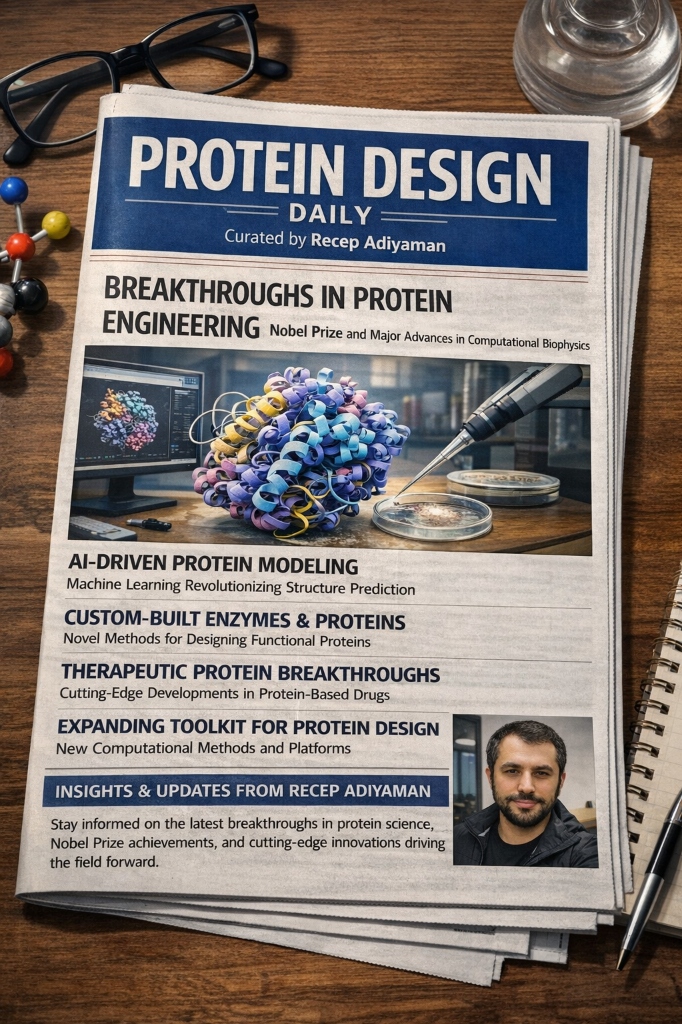
Building something in Protein Design?
I love collaborating on new architectural challenges. Let's build together.
🧬 Protein Design Digest
Curated protein signals by Recep Adiyaman
🧬 Weekly Recap
Jan 12 - Jan 16, 2026
Missed a day? Here are the top research signals and tools from Monday to Friday, summarized in one place.
🏆 Top Signals of the Week
🗓️ Monday, Jan 12
Synthesis, Anticancer Evaluation, and Molecular Docking of Triazolylmethyl-Dihydroquinazolinyl Benzoate Derivatives as Potential PARP-1 Inhibitors.
🧬 Abstract
Quinazolinone derivatives have emerged as promising scaffolds in medicinal chemistry due to their broad spectrum of biological activities, including anticancer potential. Incorporation of triazole rings through click chemistry has further boosted the pharmacological relevance of such compounds, due to the triazole’s stability, bioisosterism, and ability to engage in key interactions with biological targets. Motivated by these properties, a library of 24 triazolylmethyl-dihydroquinazolinyl benzoate (TDB) derivatives (7a-x) was synthesized using a click chemistry strategy, starting from anthranilamide and phthalic anhydride. The structures of the synthesized compounds were established through IR, 1 H NMR, 13 C NMR, and HRMS spectral analysis. The anticancer potential of all derivatives was evaluated by using SRB assay, with compounds 7j and 7q displaying notable activity, with GI 50 values of 22 and 48 µg/mL, respectively. In addition, compounds 7a, 7e, 7f, 7l, 7u, 7v, and 7x displayed moderate activity, with GI 50 values ranging from 58 to 77 µg/mL. In addition, molecular docking studies were performed using poly(ADP-ribose) polymerase-1 as the target enzyme, and the results confirmed that the TDB derivatives exhibited strong binding affinity. Furthermore, molecular dynamics simulations were conducted to evaluate the stability of the docked complexes, specifically for compounds 7j and 7q, which confirmed that the TDB derivatives formed stable interactions with poly(ADP-ribose) polymerase-1.
Why it matters: Provides actionable mutations to enhance catalytic efficiency or thermostability.
🗓️ Tuesday, Jan 13
Geometric deep learning assists protein engineering. Opportunities and Challenges.
🧬 Abstract
Protein engineering is experiencing a paradigmatic transformation through the integration of geometric deep learning (GDL) into computational design workflows. While traditional approaches such as rational design and directed evolution have achieved significant progress, they remain constrained by the vastness of sequence space and the cost of experimental validation. GDL overcomes these limitations by operating on non-Euclidean domains and by capturing the spatial, topological, and physicochemical features that govern protein function. This perspective provides a comprehensive and critical overview of GDL applications in stability prediction, functional annotation, molecular interaction modeling, and de novo protein design. It consolidates methodological principles, architectural diversity, and performance trends across representative studies, emphasizing how GDL enhances interpretability and generalization in protein science. Aimed at both computational method developers and experimental protein engineers, the review bridges algorithmic concepts with practical design considerations, offering guidance on data representation, model selection, and evaluation strategies. By integrating explainable artificial intelligence and structure-based validation within a unified conceptual framework, this work highlights how GDL can serve as a foundation for transparent, interpretable, and autonomous protein design. As GDL converges with generative modeling, molecular simulation, and high-throughput experimentation, it is poised to become a cornerstone technology for next-generation protein engineering and synthetic biology.
Why it matters: Critical for improving fold accuracy and reducing structural uncertainty in de novo design.
🗓️ Wednesday, Jan 14
Advantages and Limitations of AlphaFold in Structural Biology: Insights from Recent Studies.
🧬 Abstract
Over the past three years, AlphaFold-a deep learning-based protein structure prediction system-has transformed structural biology by providing near-experimental accuracy models directly from amino acid sequences. This narrative review synthesizes applications reported in the 2022-2025 literature across human, microbial, and viral systems, drawing on peer-reviewed studies as our data source. Representative examples include modeling of SARS-CoV-2 spike and nucleocapsid proteins in virology, assisting cryo-EM interpretation of bacterial ribosomal and membrane-protein complexes in microbiology, and refining conformational hypotheses for human GPCRs in biomedicine. Across these cases, AlphaFold predictions have complemented experimental workflows by accelerating hypothesis generation, improving model fitting within ambiguous density regions (poorly resolved areas of cryo-EM maps), and guiding mutagenesis strategies to probe dynamic conformational states. We also summarize recent method extensions: AlphaFold-Multimer improves multi-chain complex assembly prediction, while molecular dynamics (MD) simulations augment AlphaFold’s static models by sampling conformational flexibility and testing stability. Despite these advances, important limitations remain-particularly for intrinsically disordered regions, protein-ligand and protein-cofactor interactions, and very large or transient assemblies-and current community benchmarks indicate that approximately one-third of residues may lack atomistic precision, underscoring uncertainty in flexible or modified segments. Framed within a clear chronological window and evidence base, our analysis highlights both the practical impact and the remaining challenges of integrating AlphaFold with experiment, outlining priorities where further methodological innovation and orthogonal validation are needed.
Why it matters: Critical for improving fold accuracy and reducing structural uncertainty in de novo design.
🗓️ Thursday, Jan 15
Benchmarking co-folding methods to predict the structures of covalent protein-ligand complexes.
🧬 Abstract
Targeted covalent inhibitors (TCIs) are emerging as a new modality in drug discovery because of their strong binding affinity and prolonged target engagement. However, the rational design of TCIs remains a significant challenge and is hindered by the lack of methods that accurately predict the structures of covalent protein-ligand complexes. Recent advances in co-folding approaches have made substantial strides in modeling complex biomolecular structures. Despite significant progress, their performance profiles for predicting the structures of covalent protein-ligand complexes remain largely unexplored because of the absence of rigorous benchmarks. Here, we introduce CoFD-Bench, a comprehensive benchmark dataset comprising 218 recently resolved covalent complexes designed to systematically evaluate both classical docking methods (AutoDock-GPU, CovDock, and GNINA) and deep learning co-folding models (AlphaFold3 (AF3), Chai-1, and Boltz-1x). Our results demonstrate that co-folding methods achieve superior ligand RMSD accuracy and protein-ligand interaction recovery. However, their performance markedly declines for novel pocket-ligand pairs. In contrast, classical docking methods exhibit stable but modest performance, which is primarily limited by target conformations. Furthermore, computational efficiency evaluations show that co-folding methods are slower than classical approaches, posing challenges for large-scale predictions. We also reveal that AF3 has the potential to identify native covalent residues through noncovalent co-folding, with a ligand RMSD comparable to that of covalent co-folding. These findings offer a possible route to explore covalent binding without prior specification of reactive residues, which are often unknown in real-world scenarios. Our study provides crucial insights and new opportunities for future co-folding-based TCI design, informing future model applications and improvements. CoFD-Bench offers rigorous evaluation criteria, diverse docking scenarios, and various methodological baselines, positioning it as an important benchmark for future model development and assessment.
Why it matters: Critical for improving fold accuracy and reducing structural uncertainty in de novo design.
🗓️ Friday, Jan 16
In Silico Discovery of RIOK3 Inhibitors Against Pancreatic Ductal Adenocarcinoma Using Homology Modelling, Molecular Docking, Molecular Dynamics Simulations, ADMET Prediction, and MTT assay
🧬 Abstract
Abstract Pancreatic ductal adenocarcinoma (PDAC) is an aggressive cancer strongly linked to RIO Kinase 3 (RIOK3), which promotes progression by stabilizing and phosphorylating Focal Adhesion Kinase (FAK). Advances in protein structure prediction, particularly AlphaFold2, have significantly enhanced our understanding of protein dynamics, aiding in the identification of potential inhibitors for targeted therapies. This study used structure-based virtual screening, molecular dynamics simulations, ADMET/toxicity prediction, and in vitro validation to identify potential inhibitors of RIOK3 for PDAC treatment. The 3D structure of RIOK3 was predicted using AlphaFold2 and docked with FDA-approved drugs via AutoDock Vina. Pharmacokinetic and pharmacodynamic properties were assessed with SwissADME, and in vitro validation was performed using MTT assays to assess cell viability and growth inhibition. Four top-scoring compounds were identified, with binding energies between − 11.3 and − 10.4 kcal/mol. Venetoclax showed the most stable complex with RIOK3, followed by Conivaptan and Irinotecan. Drospirenone showed weaker binding. Molecular dynamics simulations and MM/GBSA analysis supported the stability of these complexes. SwissADME and ProTox-II confirmed that the compounds met drug-likeness criteria but exhibited distinct pharmacokinetic and toxicity profiles. In vitro MTT assays showed concentration-dependent growth inhibition in PANC-1 cells, with Conivaptan having the lowest IC₅₀ value. This study identifies RIOK3 as a promising therapeutic target for PDAC, with Venetoclax, Conivaptan, Drospirenone, and Irinotecan as repurposable candidates for further research. Further studies should include biochemical assays, expanded cytotoxicity profiling in multiple PDAC cell lines, and in vivo evaluations to validate RIOK3-targeted therapies for PDAC treatment.
Why it matters: Critical for improving fold accuracy and reducing structural uncertainty in de novo design.
📚 All Papers & Quick Reads
🗓️ Monday, Jan 12
- Leveraging Consensus Docking Approaches for Human Mitochondrial Complexes I and III.: Although recent progress has been made, structure-based methods such as molecular docking are still underexplored in the context of toxicity prediction. These approaches offer added value, particularly in addressing challenges such as activity cliffs─i.e.,…
- Mitigation conferred by banana flower extract against aflatoxin-induced oxidative stress, inflammation, apoptosis, molecular docking, and histological disturbances in rabbits.: This study investigated the protective effects of banana flower extract (BFE) against aflatoxin B1 (AFB1)-induced oxidative stress, inflammation, and immune dysfunction in growing rabbits. One hundred and twenty rabbits were divided into four experimental…
- Tensor-DTI: Enhancing Biomolecular Interaction Prediction with Contrastive Embedding Learning: Accurate drug-target interaction (DTI) prediction is essential for computational drug discovery, yet existing models often rely on single-modality predefined molecular descriptors or sequence-based embeddings with limited representativeness. We propose…
- AI-driven <i>de novo</i> design of BRAF inhibitors with enhanced binding affinity and optimized drug-likeness.: Background Traditional drug discovery methods, such as high-throughput screening (HTS), are often inefficient and costly, especially in complex areas like oncology. The BRAF V600E mutation is a validated therapeutic target in cancers such as melanoma,…
- Emphasizing the role of oxidative stress and Sirt-1/Nrf2 and TLR-4/NF-κB in Tamarix aphylla mediated neuroprotective potential in rotenone-induced Parkinson’s disease: In silico and in vivo study.: Parkinson’s disease (PD) presents as a progressive deterioration of dopaminergic neurons, a process closely associated with increased oxidative damage due to accumulated reactive oxygen species, leading to weakened antioxidant defenses and ultimately…
- Decision Tree for Prediction of Binding Affinity.: Recent advances in machine learning methods indicate the adequacy of these approaches to build scoring functions to predict binding affinity. Applying the scoring function to determine protein-ligand interaction is a pivotal step in the early stages of…
- Machine Learning for Protein Science and Engineering.: Recent years have seen significant breakthroughs at the intersection of machine learning and protein science. Tools such as AlphaFold have revolutionized protein structure prediction. They are also enabling variant effect prediction and functional…
- Mechanistic study on the peripheral cannabinoid-1 receptor blockers based on the tricyclic scaffolds.: Cannabinoid-1 receptor (CB1R) is one of the promising targets for treating various diseases, various antagonists, agonists and reverse agonists targeting CB1R have been synthesized and investigated for clinical use. In this work, we used molecular docking…
🗓️ Tuesday, Jan 13
- Network Pharmacology and Molecular Docking Identify Medicarpin as a Potent CASP3 and ESR1 Binder Driving Apoptotic and Hormone-Dependent Anticancer Activity.: Ovarian cancer (OC) remains one of the most lethal gynecologic malignancies due to late diagnosis, rapid progression, and frequent chemoresistance. Despite advances in targeted therapy, durable responses are uncommon, underscoring the need for novel…
- Immunoinformatics-based design and evaluation of a multi-epitope vaccine against Vibrio fluvialis.: Vibrio fluvialis is an emerging foodborne pathogen causing gastroenteritis and extraintestinal infections, representing a significant public health concern due to rising antimicrobial resistance and the absence of an approved vaccine. This study aimed to…
- <i>In silico</i> structural analysis of carbapenemase variants in <i>Klebsiella pneumoni</i>ae: insights for precision drug discovery against multidrug-resistant strains.: Background Carbapenemase-producing Klebsiella pneumoniae severely limits treatment options by inactivating carbapenem and other β-lactam antibiotics. To support precision drug discovery, this study investigates how structural and dynamic differences among…
- Structure Elucidation, Biological and Molecular Docking Studies of the δ‑Endotoxin Cry1Ca17 from Bacillus thuringiensis Strain BUPM14
- Phytochemical Profiling, Molecular Docking, ADMET Analysis of Zingiber Officinale Peel Extract for the Biogenic Synthesis of ZnO and Fe-Doped ZnO Nanoparticles with Antibacterial and Photocatalytic Potential
- Alkamides from Piper nigrum and their potential inhibitory effect on NLRP3 inflammatory activation.: Four previously undescribed alkamides (1-4) were isolated from the fruits of Piper nigrum. Their chemical structures were elucidated using HRESIMS, NMR, and optical rotation analyses. A classical NLRP3 inflammasome activation model was established by…
- Multispectral and Molecular Dynamics Study on the Interactions Between α-Amylase and Four Sesquiterpene Lactone Compounds.: This study compared the inhibitory effects and mechanisms of four sesquiterpene lactones derived from Asteraceae plants on α-amylase using enzymatic kinetics, multi-spectral techniques, and molecular docking methods. It was found that compounds A, B, and C…
- A novel CLPP variant in a Pakistani family with Perrault syndrome associated with recurrent fevers.: Perrault syndrome (PRLTS) is an autosomal recessive disease with sensorineural hearing loss and ovarian dysfunction in girls, and either a fluctuating neurological phenotype or not. PRLTS type 2 is known to be caused by pathogenic variants of the CLPP gene…
🗓️ Wednesday, Jan 14
- Mechanisms of Okanin against wound healing based on network pharmacology, molecular docking and molecular dynamics simulation.: Wound healing is a critical aspect of modern medicine, impacting patient health, quality of life, and healthcare resource allocation. Okanin, a flavonoid from the Asteraceae family, has shown potential in promoting wound healing. This study investigates…
- Integrative gene target mapping, RNA sequencing, in silico molecular docking, ADMET profiling and molecular dynamics simulation study of marine derived molecules for type 1 diabetes mellitus.: Type 1 diabetes mellitus (T1DM) is a metabolic disease leading threat to human health around the world. Here we aimed to explore new biomarkers and potential therapeutic targets in T1DM through adopting integrated bioinformatics tools. The gene expression…
- Structure-Guided Design of Novel Diarylpyrimidine-Based NNRTIs Through a Comprehensive In Silico Approach: 3D-QSAR, ADMET Evaluation, Molecular Docking, and Molecular Dynamics.: Background/Objectives: The emergence of drug-resistant HIV-1 strains challenges the long-term efficacy of current antiretroviral therapies. Non-nucleoside reverse transcriptase inhibitors (NNRTIs) are critical in HIV-1 treatment; however, the need for new…
- Potential Mechanisms of Tetramethylpyrazine in the Treatment of Traumatic Brain Injury Based on Network Pharmacology, Molecular Docking, Molecular Dynamics Simulations, and in vivo Experiments.: Background Traumatic brain injury (TBI) is a leading cause of global disability and mortality. Tetramethylpyrazine (TMP), an active compound from Chuanxiong, holds promise for treating cerebrovascular diseases, but its precise mechanism of action against…
- Molecular Docking Analysis of Some Nrf2 Activators as Therapeutic Agents for the Control of Schistosomiasis: Abstract This study assessed the antischistosomal potentials of Curcumin, resveratrol and sulforaphane in silico . Sequences of Schistosoma mansoni adenylate cyclase, farnesyl diphosphate synthase, geranylgeranyl diphosphate synthase and thioredoxin…
- Synthesis and EGFR binding evaluation of various substituted aurones via molecular docking approaches.: Aurones, belonging to the flavonoid family and widely distributed in various plant species, have attracted significant attention due to their potential inhibitory effects on the epidermal growth factor receptor (EGFR). In this study, a series of…
- Integrated network toxicology, molecular docking, molecular dynamics simulation, and experimental verification to elucidate the mechanism of hepatotoxicity and processing detoxification in Fructus Meliae Toosendan.: Fructus Meliae Toosendan (FMT) has been traditionally used in Chinese medicine, yet its mechanisms of its hepatotoxicity, as well as the detoxification process following processing, are still not fully elucidateed. This study aimed to investigate the…
- Machine learning-guided repurposing of FDA-approved quinolones as dual cholinesterase inhibitors: A multi-level docking, molecular dynamics, DFT, and SHAP-based analysis.: Alzheimer’s disease (AD) involves progressive cholinergic degeneration, with acetylcholinesterase (AChE) and butyrylcholinesterase (BChE) playing key enzymatic roles in its pathology. In this study, we computationally repurposed four FDA-approved quinolone…
🗓️ Thursday, Jan 15
- Unexplored regions of the protein sequence-structure map revealed at scale by a library of foldtuned language models: Amino-acid sequence space is combinatorially vast, with well-folded proteins distributed sparsely and connected by vanishingly few permissible mutational paths. Novel-in-sequence versions of structures observed in nature promise to sample features such as…
- Structure-based identification of triazole-based PARP1 inhibitors: insights from docking and molecular dynamics simulations.: Background Poly (ADP-ribose) polymerase 1 (PARP1) is a critical enzyme involved in DNA repair mechanisms, making it a promising target for anticancer drug development. Triazole derivatives have shown potential as PARP1 inhibitors, but systematic evaluation…
- Integrating machine learning and molecular docking to reveal the molecular network of aflatoxin B1-induced colorectal cancer: Abstract Aflatoxin B1 (AFB1) contributes to colorectal cancer development through multiple molecular pathways. This study aims to investigate the molecular mechanisms underlying Colorectal cancer (CRC) induced by AFB1. Using integrative transcriptomic…
- Role of gut microbiota metabolites against vein graft restenosis: insights from network pharmacology, molecular docking and molecular dynamic simulation.: Background Gut microbiota metabolites are increasingly recognized for their role in modulating chronic disease progression. However, their potential impact on vein graft restenosis (VGR) remains unexplored. This study aimed to elucidate the mechanisms by…
- Comparative Molecular Docking Analysis, of Natural and Synthetic Ligands, Targeting BRCA1, BRCA2, ER, and PR in Breast Cancer Treatment.: Objective Breast cancer remains a leading cause of cancer-related mortality in women, necessitating the development of innovative therapeutic strategies. This study employs comparative molecular docking to evaluate the binding affinities of natural…
- AI-Powered Structural and Co-Expression Analysis of Potato (<i>Solanum tuberosum</i>) <i>StABCG25</i> Transporters Under Drought: A Combined AlphaFold, WGCNA, and MD Approach.: Drought stress significantly impacts potato ( Solanum tuberosum ) yield and quality, necessitating the identification of molecular regulators involved in stress response. This study presents a systems-level, integrative in silico strategy to characterize…
- Exploring structural diversity and dynamic stability of small-molecule PRMT5 inhibitors through machine learning-based QSAR and molecular modelling.: Protein arginine methyltransferase 5 (PRMT5) is a key epigenetic enzyme that catalyses symmetric arginine methylation on histone and non-histone proteins, influencing chromatin organisation, RNA splicing, and oncogenic signalling. Its overexpression and…
- Molecular docking and fluorescence spectroscopy analysis of the interaction of different polyphenols with salivary mucin and proline-rich protein toward the astringency mechanism.: Molecular docking, fluorescence spectroscopy, Fourier transform infrared (FTIR), and circular dichroism (CD) spectroscopy were used to systematically analyze the interactions between saliva mucin (MUC) or basic proline-rich proteins (bPRPs) and five…
🗓️ Friday, Jan 16
- Shaping a pro-carcinogenic hepatic microenvironment by TCDD: An integrated approach combining network toxicology, machine learning, molecular docking, molecular dynamics and experimental validation.: The increasing prevalence of environmental contaminants has raised concerns regarding their potential contribution to hepatic dysfunction and associated diseases. 2,3,7,8-tetrachlorodibenzo-p-dioxin (TCDD), classified as a Group 1 carcinogen and the most…
- In Silico Identification of Lepiotaprocerin C as a Promising PIM-1 Kinase Inhibitor: An Integrated Docking, Molecular Dynamics, MM/PBSA, QSAR, and ADMET Study.: Proviral Integration site for Moloney murine leukemia virus-1 (PIM-1) kinase, a serine/threonine kinase overexpressed in various malignancies, plays a critical role in promoting cell survival and proliferation, making it a promising target for anticancer…
- Evaluation of Drug-Excipient Compatibility of Ibuprofen with Eggshell-Derived Calcium Citrate Using FTIR, DSC, and Molecular Docking Studies: Abstract Ethnomedicinal Relevance : The use of eggshells for nutritional and medicinal purposes has long been documented in African folklore, where crushed or powdered shells are traditionally administered to enhance bone strength, treat calcium…
- Network Pharmacology, Molecular Docking, and Molecular Dynamics Simulations to Elucidate the Potential Mechanism of Ermiao San in Osteoarthritis.: This study aims to identify the active components and molecular mechanisms of Ermiao San (EMS) in the treatment of osteoarthritis (OA) through network pharmacology, molecular docking, and molecular dynamics simulations. EMS compounds and their targets were…
- Network pharmacology, molecular docking and molecular dynamics simulation suggest CE-326597 as an antimalarial molecule.: Malaria remains a major health challenge, intensified by the spread of drug-resistant strains. To address this, we explored natural products and derivatives for antimalarial potential using in silico approaches. Through a similarity-based optimization…
- Calycosin ameliorates high-altitude pulmonary edema by regulating macrophage polarization through the PPAR-γ/NF-κB pathway: a comprehensive analysis of network pharmacology, molecular docking, and experimental validation.: The rapid ascent to high-altitude regions poses a substantial risk for the development of high-altitude pulmonary edema (HAPE), a serious condition characterized by non-cardiogenic pulmonary edema and associated acute pulmonary hypertension. Calycosin, a…
- Virtual screening of sweet peptides from milk protein and molecular dynamics simulations mechanism analysis.: Bioactive peptides derived from milk proteins have attracted increasing interest due to their potential as natural sweet-tasting compounds. In this study, an integrated in silico strategy was developed to identify sweet peptides from milk proteins. The…
- DeFlow: Decoupling Manifold Modeling and Value Maximization for Offline Policy Extraction: We present DeFlow, a decoupled offline RL framework that leverages flow matching to faithfully capture complex behavior manifolds. Optimizing generative policies is computationally prohibitive, typically necessitating backpropagation through ODE solvers….
🛠️ Tools & Datasets
- 🛠 Tool: RFdiffusion - State-of-the-art generative model for de novo protein design.
- 🛠 Tool: ProteinMPNN - High-speed sequence design optimized for fixed-backbone folding.
- 💾 Dataset: UniRef - Clustered protein sequence sets for fast similarity searches.
- 💾 Dataset: BFD - Big Fantastic Database for deep learning protein modeling.
- 🛠 Tool: OpenFold - Fast, trainable, and open implementation of AlphaFold2.
- 💾 Dataset: MGnify - Metagenomics resource for microbiome sequence data.
- 🛠 Tool: ChimeraX - Next-gen molecular visualization for large data sets.
- 💾 Dataset: PDBbind - Binding affinity data with 3D structures of protein-ligand complexes.
- 🛠 Tool: AlphaFold2 - Deep learning system for high-accuracy protein structure prediction.
- 💾 Dataset: BioLiP - Verified biologically relevant ligand-protein interactions.
- 🛠 Tool: ColabFold - Fast AlphaFold2/MMseqs2 pipeline for large-scale predictions.
- 💾 Dataset: SIFTS - Residue-level mapping between PDB, UniProt, and other resources.
🤖 AI in Research Recap
- AI: OpenAI leans into Healthcare with ChatGPT. RTZ #963 - AI: Reset to Zero: AI: OpenAI leans into Healthcare with ChatGPT. RTZ #963 AI: Reset to Zero
- Uncovering a Hidden Mechanism in Met Receptor Activation - Asia Research News |: Uncovering a Hidden Mechanism in Met Receptor Activation Asia Research News |
- Advanced Mass Spectrometry Reveals Protein Folding Dynamics in Ribosome-Nascent Chain Complex - geneonline.com: Advanced Mass Spectrometry Reveals Protein Folding Dynamics in Ribosome-Nascent Chain Complex geneonline.com
- Beyond the Protein: How AlphaFold 3 Redefined the Blueprint of Life and Accelerated the Drug Discovery Revolution - FinancialContent: Beyond the Protein: How AlphaFold 3 Redefined the Blueprint of Life and Accelerated the Drug Discovery Revolution FinancialContent
- Network-Driven Computational Framework Identifies FDA-Approved Drug Repurposing Across Heterogeneous Brain Cancers - Frontiers: Network-Driven Computational Framework Identifies FDA-Approved Drug Repurposing Across Heterogeneous Brain Cancers Frontiers
- The Digital Microscope: How AlphaFold 3 is Decoding the Molecular Language of Life - FinancialContent: The Digital Microscope: How AlphaFold 3 is Decoding the Molecular Language of Life FinancialContent
- Researchers develop AI tool to predict how shapeshifting proteins connect inside cells - The Hindu: Researchers develop AI tool to predict how shapeshifting proteins connect inside cells The Hindu
- Scientists have gotten good at blocking enzymes to treat disease. Now can they speed them up? - EurekAlert!: Scientists have gotten good at blocking enzymes to treat disease. Now can they speed them up? EurekAlert!
- The Patent Cliff - Brownstone Research: The Patent Cliff Brownstone Research
- Converge Bio raises $25M to bring generative AI drug discovery to every biotech and pharmaceutical company - The Malaysian Reserve: Converge Bio raises $25M to bring generative AI drug discovery to every biotech and pharmaceutical company The Malaysian Reserve
- ‘Avatar’ Oscar Winner Mark Sagar, Graphic India’s Sharad Devarajan Launch AI Storytelling Studio FaiBLE (Exclusive) - IMDb: ‘Avatar’ Oscar Winner Mark Sagar, Graphic India’s Sharad Devarajan Launch AI Storytelling Studio FaiBLE (Exclusive) IMDb
- The Atomic Revolution: How AlphaFold 3’s Open-Source Pivot Has Redefined Global Drug Discovery in 2026 - FinancialContent: The Atomic Revolution: How AlphaFold 3’s Open-Source Pivot Has Redefined Global Drug Discovery in 2026 FinancialContent
🏢 Industry & Real-World Applications
- Biologics for bone regeneration: advances in cell, protein, gene, and mRNA therapies - Nature: Biologics for bone regeneration: advances in cell, protein, gene, and mRNA therapies Nature
- Top 10 Biotech Startups In 2026 - inventiva.co.in: Top 10 Biotech Startups In 2026 inventiva.co.in
- 1st biotech IPO of 2026 sees Aktis bring in $318M via upsized offering - Fierce Biotech: 1st biotech IPO of 2026 sees Aktis bring in $318M via upsized offering Fierce Biotech
- Fierce Pharma Asia—China biotech deal spree rolls on; Shionogi buys Tanabe’s ALS business - Fierce Pharma: Fierce Pharma Asia—China biotech deal spree rolls on; Shionogi buys Tanabe’s ALS business Fierce Pharma
- Aktis raises $318M in 2026’s first biotech IPO - BioPharma Dive: Aktis raises $318M in 2026’s first biotech IPO BioPharma Dive
- Boltz takes off with $28M seed, partners with Pfizer on AI drug discovery - FirstWord: Boltz takes off with $28M seed, partners with Pfizer on AI drug discovery FirstWord
- Boltz Bags $28M Funding and Pfizer Partnership for Biomolecular AI Boost - TechRepublic: Boltz Bags $28M Funding and Pfizer Partnership for Biomolecular AI Boost TechRepublic
- Fierce Biotech Fundraising Tracker ‘26: Kinaset’s $103M series B; AirNexis flies in with $200M - Fierce Biotech: Fierce Biotech Fundraising Tracker ‘26: Kinaset’s $103M series B; AirNexis flies in with $200M Fierce Biotech
- FDA Guidance to Update Clinical Trials - respiratory-therapy.com: FDA Guidance to Update Clinical Trials respiratory-therapy.com
- Layoff Tracker: Rampart Shuts Down, InflaRx cuts 30% of Staff - BioSpace: Layoff Tracker: Rampart Shuts Down, InflaRx cuts 30% of Staff BioSpace
- Dupilumab Most Effective Among Standard Drugs, Biologics in Prurigo Nodularis - HCPLive: Dupilumab Most Effective Among Standard Drugs, Biologics in Prurigo Nodularis HCPLive
- Newer biologics show strong drug survival for psoriasis patients - Managed Healthcare Executive: Newer biologics show strong drug survival for psoriasis patients Managed Healthcare Executive
- GeneDx Teams Up with Komodo Health to Revolutionize Rare Disease Diagnosis - OpenTools: GeneDx Teams Up with Komodo Health to Revolutionize Rare Disease Diagnosis OpenTools
- Funding for Risky Biotechs Is Returning - The Wall Street Journal: Funding for Risky Biotechs Is Returning The Wall Street Journal
- Layoff Tracker: Lyra Shutters, EMD Serono Downsizes - BioSpace: Layoff Tracker: Lyra Shutters, EMD Serono Downsizes BioSpace
- AbbVie inks USD 5.6bn global licensing deal with Chinese biotech for cancer therapy - medwatch.com: AbbVie inks USD 5.6bn global licensing deal with Chinese biotech for cancer therapy medwatch.com
- Rakuten Medical and Lotte Biologics sign CMO agreement - koreabiomed.com: Rakuten Medical and Lotte Biologics sign CMO agreement koreabiomed.com
- Juvena lands $33.5m to advance more regenerative biologics to the clinic - Longevity.Technology: Juvena lands $33.5m to advance more regenerative biologics to the clinic Longevity.Technology
- 2026 biotech funding tracker: recent highlights - Labiotech.eu: 2026 biotech funding tracker: recent highlights Labiotech.eu
- Leveraging Japan’s Appetite for U.S. Investment and Partnership in Pharmaceuticals and Biotechnology - CSIS | Center for Strategic and International Studies: Leveraging Japan’s Appetite for U.S. Investment and Partnership in Pharmaceuticals and Biotechnology CSIS | Center for Strategic and International Studies
- Beyond SBIRs: How NIH Is Reframing Its Role as a Development Partner for Biotech - BioBuzz: Beyond SBIRs: How NIH Is Reframing Its Role as a Development Partner for Biotech BioBuzz
- US biotech sector poised for 2026 rebound as IPO interest revives - Reuters: US biotech sector poised for 2026 rebound as IPO interest revives Reuters
- Fierce Biotech Fundraising Tracker ‘26: Proxima pockets $80M; Kinaset’s $103M series B - Fierce Biotech: Fierce Biotech Fundraising Tracker ‘26: Proxima pockets $80M; Kinaset’s $103M series B Fierce Biotech
💼 Jobs & Opportunities
- Clinical Bioinformatics Scientist - Indeed (Indeed Jobs)
- Bioinformatics engineer salary in Norristown, PA - Indeed (Indeed Jobs)
- Bioinformatics Jobs, Employment in Pennsylvania - Indeed (Indeed Jobs)
- 2026 Summer Intern - Computational Sciences CoE - Computational Biology and Medicine - Indeed (Indeed Jobs)
- GRAIL - Staff Data Engineer (Durham, NC) #4433 - Lever (Lever)
- Janux Therapeutics jobs - Lever (Lever)
- 4 Computational Biology jobs at Karolinska Institutet - Academic Positions (Academic Positions)
- 6 Research assistant jobs in Computational Biology - Academic Positions (Academic Positions)
- Research Associate in Computational Biology and Machine Learning at Loughborough University - Jobs.ac.uk (Jobs.ac.uk)
- Research Assistant - Computational at University of Glasgow - Jobs.ac.uk (Jobs.ac.uk)
📅 Events
Enjoyed this digest? Subscribe above to get these dailies in your inbox every morning.